
Rotobrush Air Duct Cleaning in University Park: A Homeowner’s Guide
Rotobrush is the brand name most homeowners have heard, so they ask for it by name. But that rotating brush has a narrow, material-specific job: it’s built for hard sheet metal, and on fiberglass liner it can abrade the surface and throw glass fibers straight into your airstream. The brush isn’t the problem. Brushing without checking what the ducts are made of is. Here’s how the tool actually works, when it helps, and when it quietly does harm.
How does Rotobrush cleaning actually work?
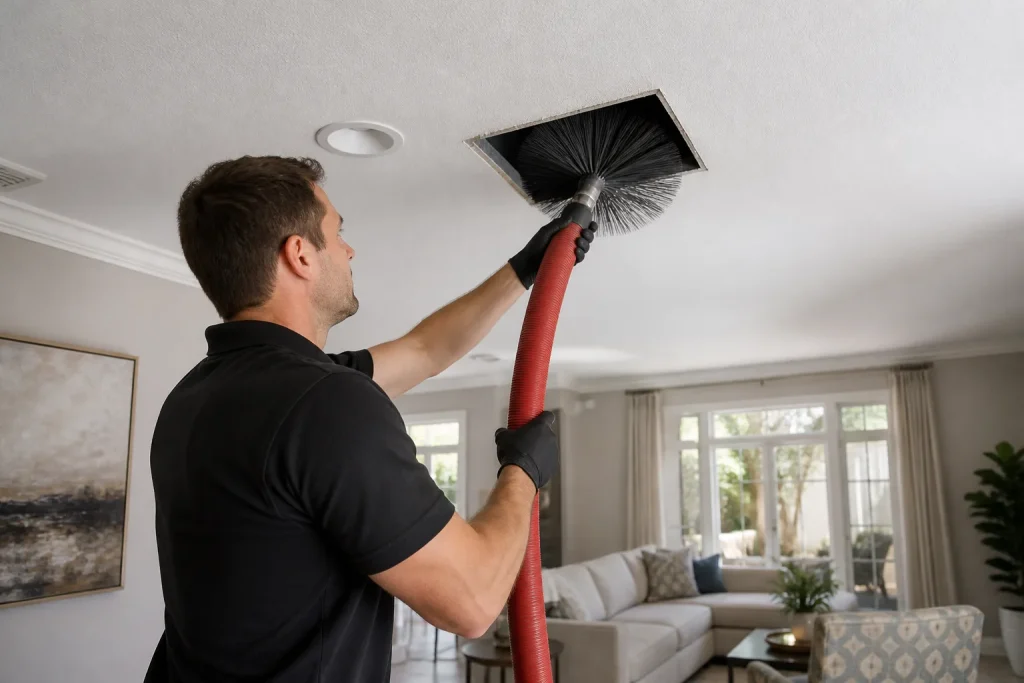
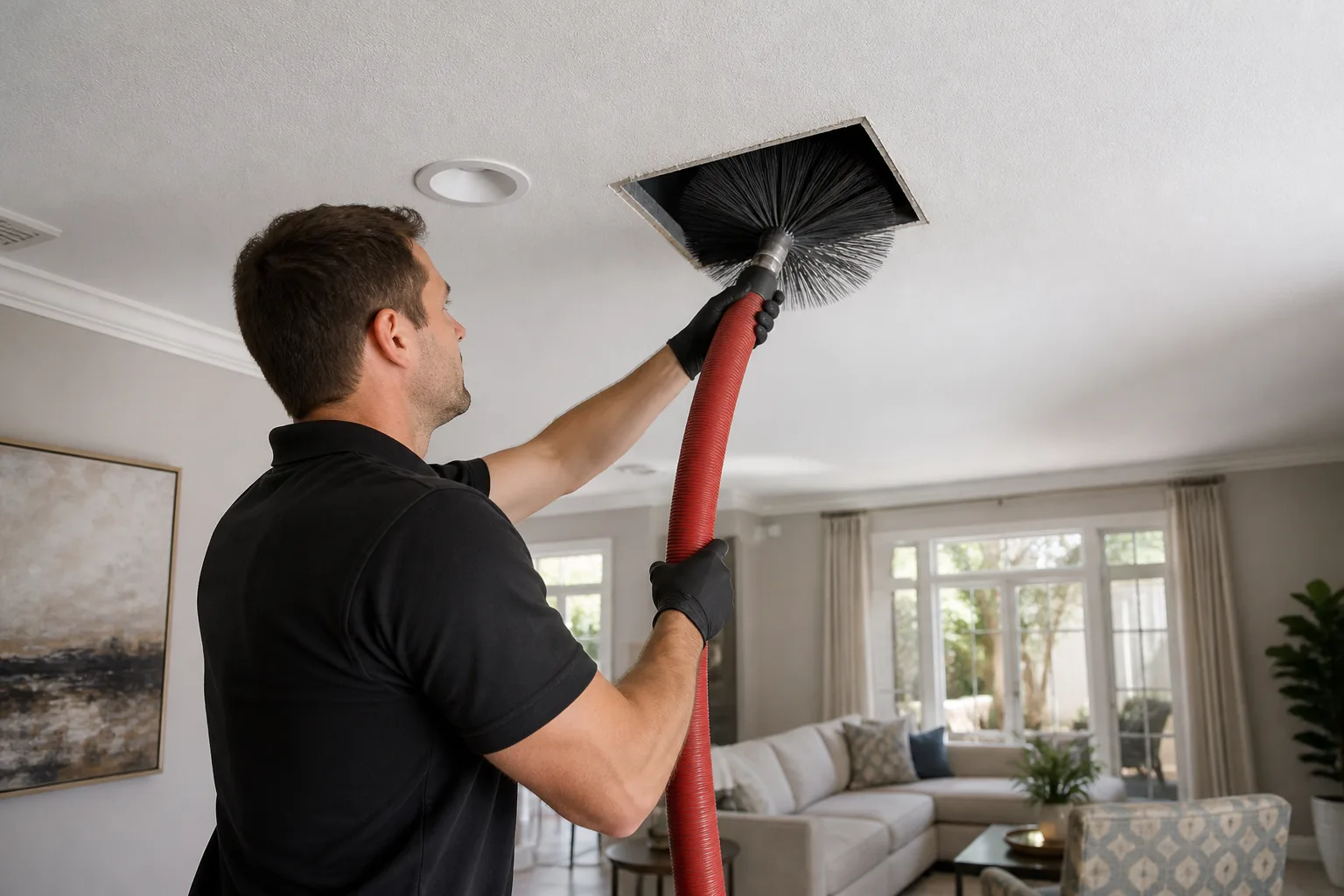
Rotobrush is a contact cleaning system: a motorized rotating brush head on a flexible whip, fed through the duct runs and coupled with a high-powered vacuum that captures what the brush loosens. The brush physically agitates dust bonded to the duct wall; the vacuum collects it. That mechanical contact is the whole point. Dust that has glued itself to sheet metal with years of grease and moisture won’t lift from airflow alone, and a brush reaches it.
The system works best in a contained setup. Our technicians run Rotobrush alongside a Nikro platform and Abatement Technologies HEPA filtration with negative air pressure, so loosened debris moves toward the collection point instead of settling back into living space. Remediation-grade equipment, residential prices – that’s the practical difference between this and a shop vacuum with a long hose.
What Rotobrush doesn’t do is inspect for you. The brush is a tool; the assessment is the skill. A technician who runs the brush before checking duct material is guessing, and in a town full of older homes with mixed duct materials, guessing has consequences.
Which duct materials can take rotary contact cleaning in University Park?
Sheet metal ductwork – galvanized steel in most University Park homes built mid-century – is the right home for rotary contact cleaning. The metal is hard, smooth, and tolerates brush contact. Rust scale and packed dust release cleanly, and the surface underneath survives intact.
Three other materials need a different approach:
- Duct board (fiberglass-lined rigid board): the interior has a fibrous, friable surface. Rotary brushing abrades it. Fibers release into the airstream, and the liner degrades faster than it would untouched. Contact cleaning is the wrong tool here.
- Flexible duct with a deteriorating liner: aged flex with a torn or flaking core shouldn’t be brushed. The liner can fail mid-cleaning. Negative-pressure cleaning with gentler agitation is the safer route, and sometimes the liner needs replacing rather than cleaning.
- Fiberglass-lined sheet metal: hard metal wrapped or lined with acoustic insulation. The metal is fine; the liner is not. The technician needs to know which is which before choosing a brush head.
In University Park, where the housing stock spans several decades of construction methods, plenum and trunk lines may be sheet metal while branch runs are flex or board. The same house can need two methods on one job. That’s normal, and a technician who tells you otherwise hasn’t looked.
What should a technician check before picking up the Rotobrush?
A proper assessment is short, hands-on, and visible to you. Ask to watch it. The technician should:
- Open a supply register and a return grille and look inside with a light and mirror or camera.
- Identify the duct material at the register, the trunk, and at least one branch run.
- Note liner condition: intact, flaking, torn, or missing.
- Check for moisture or microbial growth at the coil, plenum, and any visibly stained duct section.
- Test airflow at a few registers before cleaning, so there’s a baseline.
- Explain the cleaning method chosen and why, in plain terms, before any equipment goes in.
If a technician reaches for the brush before that inspection, stop them. It takes a few minutes and it’s the difference between cleaning your ducts and damaging them. In our experience, the assessment step is where the real specialists separate from the brush-and-run crowd.
Contact cleaning vs. negative-pressure-only: which is right for your contamination?
Rotary contact cleaning and negative-pressure-only cleaning solve different problems. Matching method to contamination is the whole game:
- Loose dust and light debris: negative pressure alone, with air agitation, usually handles it. No brush needed.
- Bonded dust, grease film, and buildup on sheet metal: contact cleaning earns its keep. The brush breaks the bond; the vacuum captures the debris.
- Mold or microbial contamination: neither method is the answer on its own. Source moisture control and remediation-grade HEPA containment come first. Abatement Technologies filtration and negative air pressure belong on this job, and sanitizing follows the physical removal, not the other way around.
- Debris and renovation dust (drywall, sawdust, construction grit): high-volume negative pressure with containment is safer and more thorough than brushing it around.
For any of these, the full scope may include sealing or repair. Clean ducts are only half the job if joints are leaking or a liner is failing. If you want the bigger picture on the full process, see our page on air duct cleaning in University Park.
When to call a pro (and when not to brush at all)
If you’re comfortable with a flashlight and a mirror, you can peek into a register and confirm the duct material yourself. That’s genuinely useful. What you shouldn’t do is run a rotary brush through ductwork without knowing what’s inside it. The same brush that cleans sheet metal safely can shred a fiberglass liner and aerosolize glass fibers into your home’s air. That’s not a job worth DIYing for the savings.
Call a professional if you see flaking liner, find moisture or musty odor at the coil or plenum, notice a visible dust plume from registers when the system kicks on, or you’ve just finished a renovation. Any of these means the method matters as much as the equipment. An honest technician will tell you when contact cleaning is wrong for your ducts, even though it’s the tool they brought.
One note on scheduling: we’re closed Saturday, so if a weekend is your only window, plan around it. We answer 24/7. Fast dispatch from 7am to 7pm, Sunday through Friday.
What should University Park homeowners ask before booking?
A handful of questions separate a technician who inspects from one who brushes first. Ask them before you book, and listen to the answer:
- “Will you inspect my duct material before choosing a cleaning method?” If the answer is vague or “we always use the Rotobrush,” that’s a red flag.
- “What do you do if you find fiberglass liner in good condition?” The correct answer involves gentler methods, not the brush.
- “Do you use HEPA filtration and negative air pressure?” Abatement Technologies containment is a reasonable standard for a residential job.
- “Will you show me before-and-after photos of my own ducts?” Photos of your home, not stock images.
- “Is the price flat per system, or does it change once you’re on-site?” One flat price agreed before work starts is the answer you want.
These questions cost nothing and tell you a lot. In our experience, homeowners who ask them get a cleaner result and a shorter invoice. If you’re also scheduling other air quality work, HVAC cleaning and dryer vent cleaning can often be handled on the same visit – your dryer vent in particular is a fire hazard waiting to happen when lint packs in. And if you want a broader overview of who we are and what we cover, start with University Park Air Duct Cleaning Co.
The Bottom Line
Rotobrush is a real tool with a real purpose: it cleans hard sheet metal effectively and it can damage fiberglass liner if used without inspection. The brand name isn’t the quality signal. The inspection is. A specialist assesses duct material before choosing a method, uses HEPA containment either way, and shows you before-and-after photos of your own ducts rather than a brochure.
Our technicians have up to 10 years of experience, and we use Rotobrush and Nikro systems alongside Abatement Technologies equipment on every job. We offer a complete scope – cleaning, mechanical repair, sealing, and post-clean air quality upgrades with Honeywell and Aprilaire products – so you don’t need a second company to finish the work. If you’re in University Park and want to know whether contact cleaning is right for your ducts, we’ll tell you straight. Call (866) 947-8605 for a free estimate. We answer 24/7, with fast dispatch from 7am to 7pm, Sunday through Friday.
Frequently Asked Questions
No. Rotobrush is a rotary contact cleaning system designed for hard sheet metal, and it can abrade fiberglass duct board and fray a deteriorating flex liner. A technician should inspect the duct material and liner condition before choosing it. If your ducts are board or aging flex, negative-pressure cleaning is the safer method.
Rotobrush contact cleaning is the right choice for bonded dust and grease film on sheet metal, where airflow alone won’t lift the buildup. For loose dust, mold, or debris, other methods with HEPA containment matter more than the brand name. Ask what your ducts are made of and what the technician recommends, then decide.
Pricing depends on system size, number of runs, duct material, and any repair or sealing needed. We quote one flat price per system after inspecting your ducts, so the number you agree to is the number you pay – no per-vent surprises. Some quotes come in far lower because the inspection and containment were skipped. Call (866) 947-8605 for a free estimate.
Most homes don’t need annual cleaning. Signs that it’s time include visible dust plumes from registers, a recent renovation, moisture or musty odor at the coil, or new allergies that track with HVAC use. If none of those apply, wait. A specialist should tell you when cleaning isn’t needed. Call (866) 947-8605 for honest guidance on whether it is.
Written by the team at University Park Air Duct Cleaning Co.
Need Air Duct Cleaning Help?
Call University Park Air Duct Cleaning Co - the local pro we connect you with is licensed and insured, with free written estimates in University Park.
(866) 947-8605