
Top Signs You Need Air Duct Cleaning Service – Don’t Ignore These
Dust on your supply registers is one of the least reliable signs that your ducts need cleaning. Most of the time it just means your filter is due for replacement, or that a little airborne dust settled on a surface that’s always moving air. The signals that actually matter live inside the system, and you can check most of them yourself in about ten minutes with a flashlight and your phone camera. What follows is how to look, what to look for, and how to tell the difference between a filter problem and a duct problem before you spend a dime in University Park.
If you’d rather skip the DIY inspection, call (866) 947-8605. We answer 24/7, and we’re happy to walk you through what you’re seeing.
Start With a 10-Minute DIY Duct Inspection
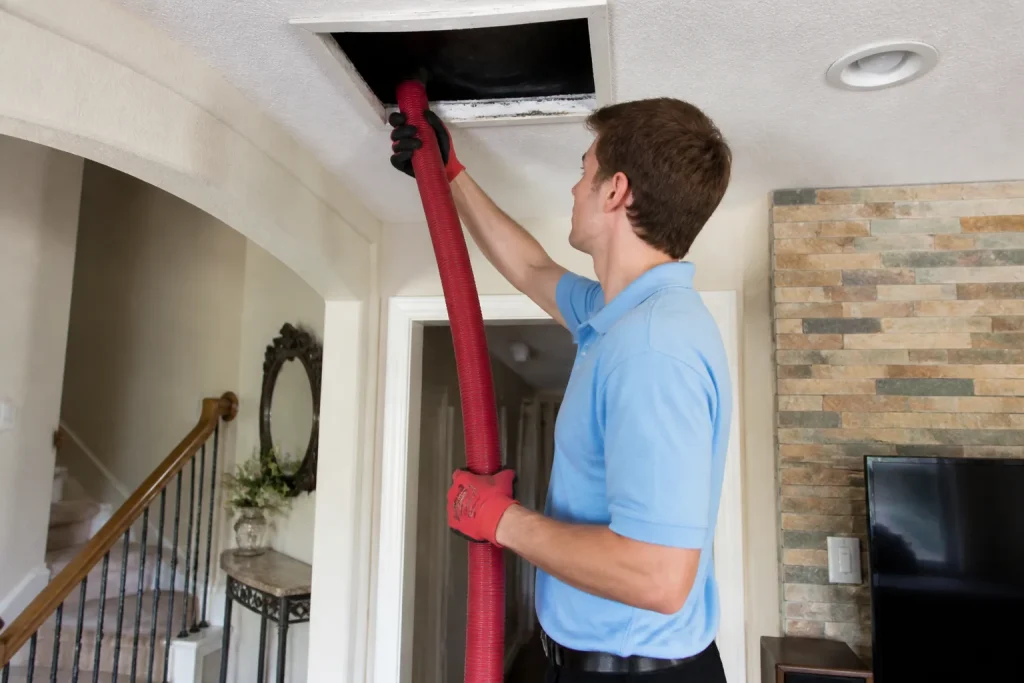
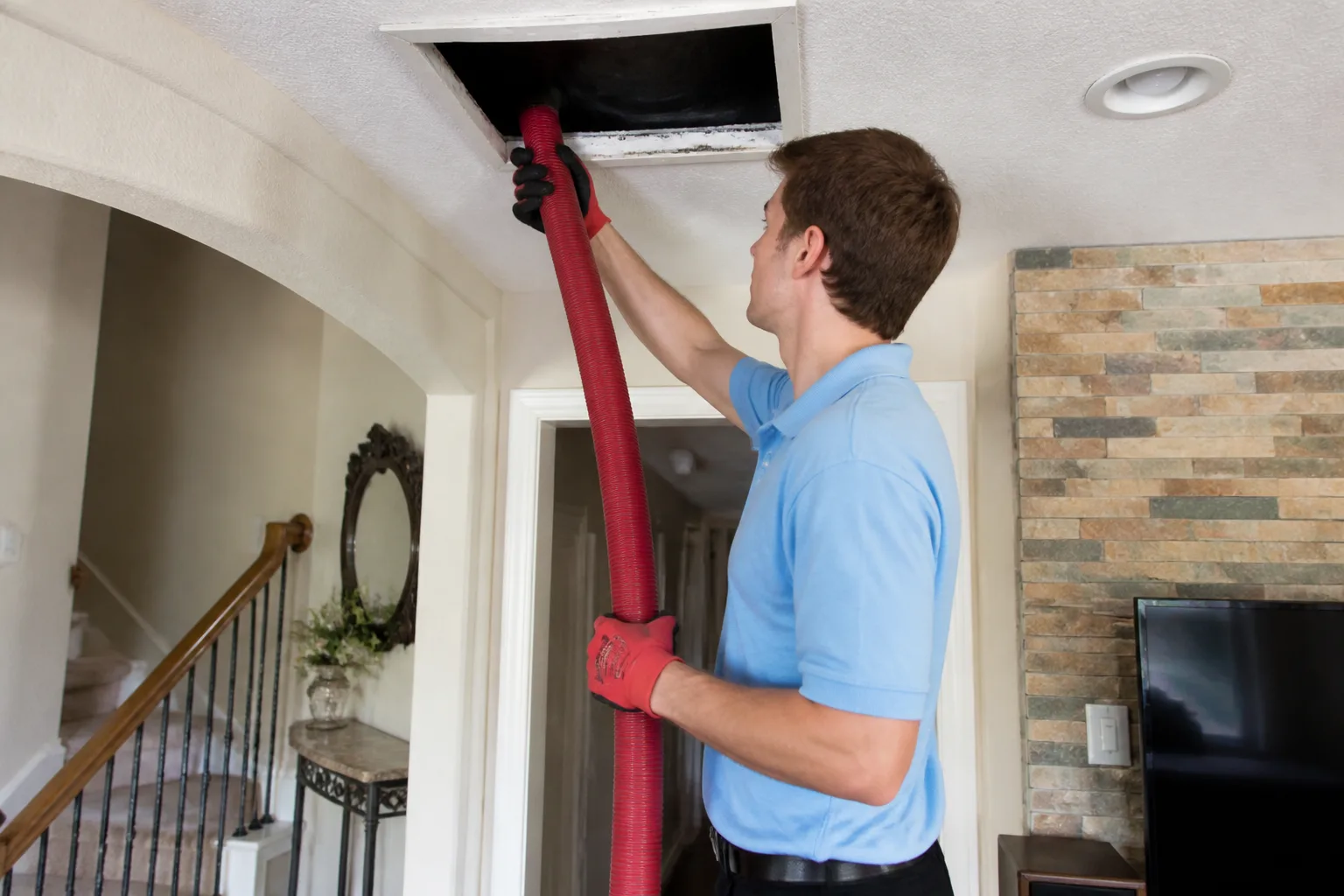
A real duct inspection is less about your vents and more about your main trunk lines – the larger rectangular or round ducts that feed the branches near your rooms. Most homeowners never look at these, and that’s exactly where debris accumulates.
Here’s the routine we suggest:
- Turn the system off at the thermostat so you’re not fighting airflow while you look.
- Find the access point closest to the air handler – often a removable panel or a section of flex duct with a clamp.
- Wipe the inside with a white paper towel about six inches in. Gray-brown dust that smears is normal. A gritty, webbed, or thick coating is not.
- Shine the flashlight down the trunk and photograph what you see with your phone. The camera picks up texture the eye misses.
- Check your supply boots where ducting meets the floor or wall. Look for a visible film, debris piles, or anything that looks like drywall dust.
In our experience inspecting ducts around University Park, we look for three things: the depth of the coating, whether it’s uniform or patchy, and whether there’s material that clearly didn’t come from a filter. Those three answers tell you more than any list of vague symptoms.
The Difference Between Filter Problems and Duct Problems
Most “my house is dusty” complaints are filter problems, not duct problems. Your filter is designed to catch what passes through it, and when it’s overdue, dust circulates everywhere. That’s a five-dollar fix, not a duct cleaning.
Here’s how to tell the two apart in University Park:
- Filter issue: dust is uniform across the whole house, the filter looks dark or clogged, and you notice the problem improves right after you change it. Ducts are probably fine.
- Duct issue: dust concentrates in specific rooms, you see it settle right after the system kicks on, and it doesn’t improve with a fresh filter. Check your trunk lines before assuming the worst.
- Both: patchy dust with visible material in the boot. That’s a duct-side problem worth a closer look.
A quick test: put a clean plastic bag over a supply register for a few minutes. If the bag shows fine debris clinging inside, you have material moving through the system. If it stays clean aside from typical room dust, you’re likely looking at a filter or housekeeping issue. This test alone saves a lot of homeowners in University Park a service call they didn’t need.
Post-Renovation Indicators You Shouldn’t Ignore
Drywall dust is one of the clearest and most specific signs that your ducts need cleaning. Drywall dust is fine, abrasive, and finds its way into every seam and joint in the system. Unlike normal house dust, it doesn’t stay put once it’s in the ducting.
Watch for these indicators after any renovation, remodeling project, or drywall work in University Park:
- Visible white or chalky powder in your supply boots – this is the most direct evidence you have. Shine a flashlight down into a boot and look.
- Dust puffs from registers when the system starts – a burst of debris at startup means material is sitting in the ducting and being pushed out.
- Fine sediment settling on horizontal surfaces within hours – normal dust accumulates over days. Drywall dust reappears quickly.
- A change in filter appearance after renovation – if a new filter clogs much faster than expected, that filter is catching what’s coming through the ducts.
If you’ve recently finished a renovation in University Park and the symptoms started showing up afterward, that’s a strong signal. Our air duct cleaning work uses Rotobrush and Nikro systems – the same platforms commercial contractors run – and our Abatement Technologies equipment handles the HEPA filtration and negative pressure that remediation-grade work requires. That’s not overkill after construction; it’s what keeps the dust from redistributing into your living space.
Smell-Based Diagnostics: What Odors Actually Tell You
Smell is one of the most reliable diagnostic signals you have, but it needs to be interpreted carefully. Odors can come from the ducts themselves, from the air handler, or from something deeper in the HVAC system. Distinguishing between them changes what work needs to happen.
- Musty, damp, or earthy smells when the system runs – often biological growth or moisture in the ductwork. This is a duct-level problem, and it usually needs more than a cleaning.
- Burning or hot-wire smells – that’s an HVAC problem, not a duct problem. Turn the system off and have a technician look at the equipment itself.
- Chemical or solvent smells that appear after renovation or a project – typically off-gassing being pulled through the system. Cleaning and a fresh filter usually solve it.
- Stale, “old-house” odor that doesn’t go away – frequently a combination of settled debris and filter neglect. Cleaning resolves the debris; the filter handles the rest.
If you can match a smell to a specific behavior – it comes on with the system, it’s in one room, or it appeared after a project – you’re ahead of the game. For newer and older properties alike around University Park, a duct cleaning with mechanical repair, sealing, and a Guardsman-grade sanitizing treatment addresses the smell at its source. When you’re ready to address an odor problem, our HVAC cleaning service handles the equipment side of the equation as well.
The Health Pattern That Correlates Most Strongly With Duct Contamination
The most telling sign that residual contamination in your ducts is affecting you is symptom relief when you leave home. That’s the pattern we tell homeowners to pay attention to first. If you wake up congested, feel better by mid-day away from home, and it repeats the next morning, the pattern points inside the house.
Other patterns in University Park worth watching:
- Family members or guests report itchy eyes, throat irritation, or congestion that occurs only in specific rooms – often the rooms fed by the shortest or dirtiest supply runs.
- Symptoms appear after the system kicks on and improve within a few hours of it running – suggests a burst of material being pushed into the space.
- Symptoms that cluster in one household member and not others – consistent with asthma or allergy sensitivity rather than a whole-home issue.
- Symptoms that appeared after a renovation, move-in, or system repair – a clue that debris entered the system and hasn’t cleared.
None of these are diagnoses. They’re patterns to notice and write down. In our experience, the homeowners who come to us having already tracked their symptoms end up making better decisions about what work to authorize. In University Park, where we’ve inspected enough systems to see this play out repeatedly, the “better away from home” pattern is the one worth taking seriously.
You can also walk through the home and check for the following during your inspection routine: increasing filter changes, loose or disconnected flex duct in crawlspaces, and damaged or unsealed joints where the system has lost suction. A duct sealing job closes those gaps so future cleaning actually holds. Our dryer vent cleaning service is also worth scheduling if it’s been a while – lint buildup is a fire risk, and it’s an easy thing to address alongside duct work.
When to Call a Pro
Call us when your own inspection turns up visible material in the trunk lines, a musty smell that returns with the system, symptoms that improve when you’re away, or drywall dust in the supply boots after a renovation. Those are the cases where a filter change won’t do the job and a proper cleaning with professional suction will. It’s less glamorous than it sounds. Few of us get excited about a duct cleaning appointment, but it beats the alternative of guessing at the problem for another year.
The first visit isn’t a sales pitch. We look at the same trunk lines you inspected, run the same smell test, and photograph what we find so you can see it too. Our technicians have up to 10 years of experience, and every job uses remediation-grade equipment. If the system doesn’t need cleaning, we’ll tell you that.
Related services in University Park: duct repair and sealing when you find disconnected or damaged runs during your inspection, and air quality and sanitizing when a smell survives a cleaning.
The Bottom Line
The signs that actually matter – visible debris in the trunk lines, drywall dust in the boots, musty smells that return with the system, symptoms that clear when you leave home – are all things you can verify yourself. Don’t rely on dusty vents, which usually just mean a filter change. Do a ten-minute inspection, take a few photos, and trust what you see over what you’ve heard.
Clean ducts are only half the job. Repair, sealing, and air quality upgrades matter just as much, and we handle all of it in one visit. If you’re in University Park and need help, University Park Air Duct Cleaning Co offers free estimates – call (866) 947-8605. We answer 24/7. Fast dispatch from 7am to 7pm, Sunday through Friday. You can also learn more about our University Park Air Duct Cleaning Co services before you call.
Frequently Asked Questions
There’s no universal schedule. Most homes do fine every three to five years if the filter is changed on time and there’s been no renovation. Homes with pets, recent construction, or recurring moisture issues usually need it sooner. Your own inspection is the better guide – if the trunk lines look clean, you don’t need us. Call (866) 947-8605 for an exact quote – estimates are free.
We quote a flat price per system, agreed before work starts, so you know the total up front. We don’t price per vent or use teaser coupons because those lead to the bait-and-switch problem that plagues this industry. You’ll see before-and-after photos of your own ducts, so the work is verifiable. Call (866) 947-8605 for an exact quote – estimates are free.
Ask for before-and-after photographs of your own ductwork, and ask which equipment will be used on the job. We use Rotobrush and Nikro professional systems and Abatement Technologies HEPA equipment, which is a better verifier than a vague verbal assurance. If a company won’t show you photos, that’s your answer. Call (866) 947-8605 with any questions – we’re happy to explain what the process looks like.
Very low quotes typically mean per-vent pricing that escalates once the technician is on site, or consumer-grade vacuums instead of professional suction. The cheap bid doesn’t include the equipment your ducts need, and it doesn’t include repair or sealing if the inspection finds an issue. A flat-plate quote for the whole system, in writing, is the honest comparison. We answer 24/7 at (866) 947-8605.
Written by the team at University Park Air Duct Cleaning Co.
Need Air Duct Cleaning Help?
Call University Park Air Duct Cleaning Co - the local pro we connect you with is licensed and insured, with free written estimates in University Park.
(866) 947-8605