
Last updated November 24, 2026
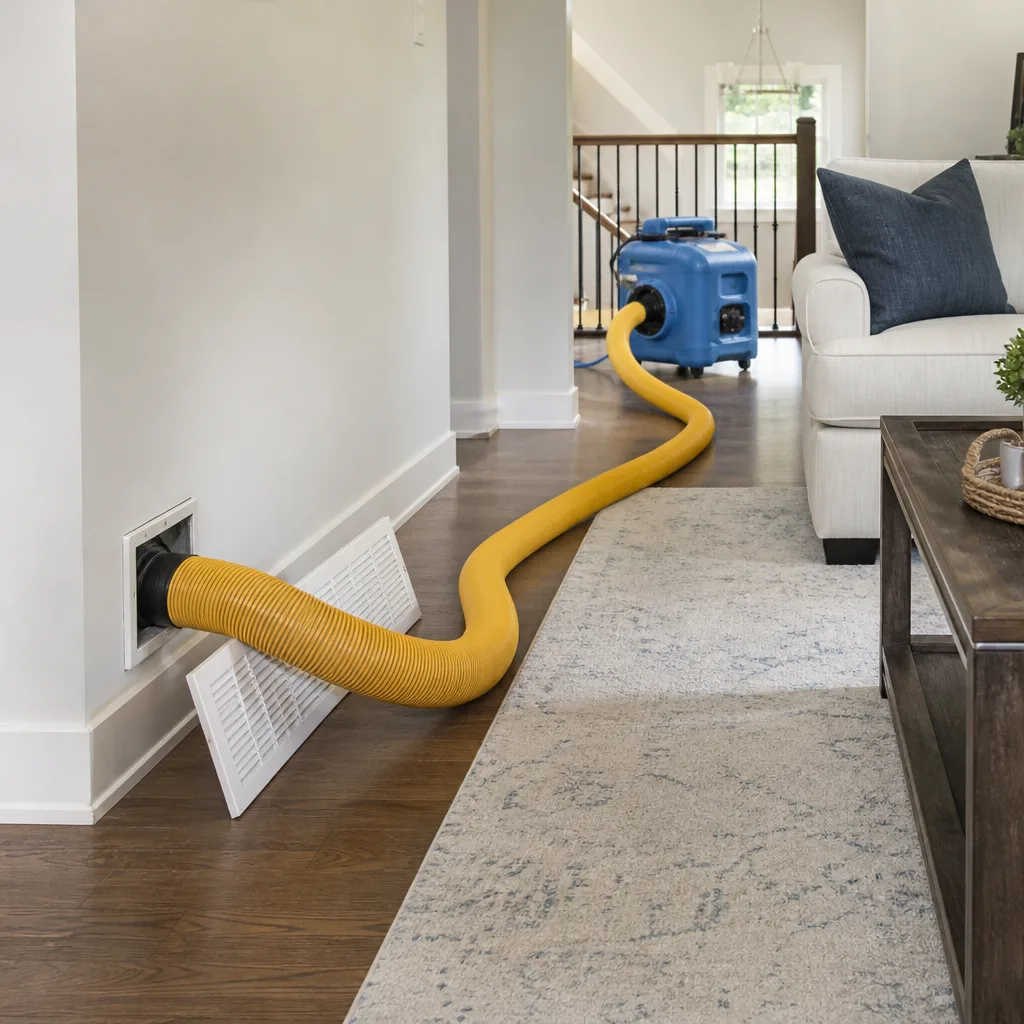 Whole-home duct cleaning
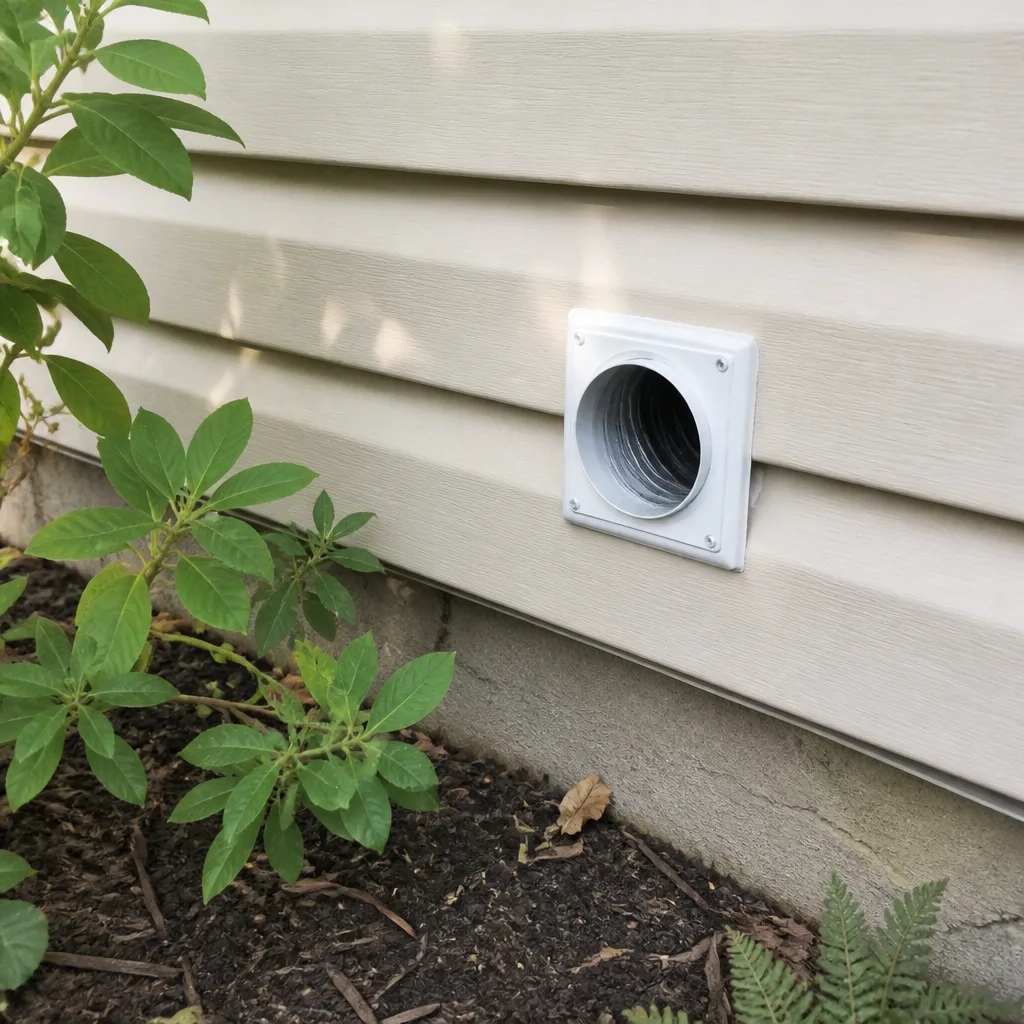 Dryer vent cleaning
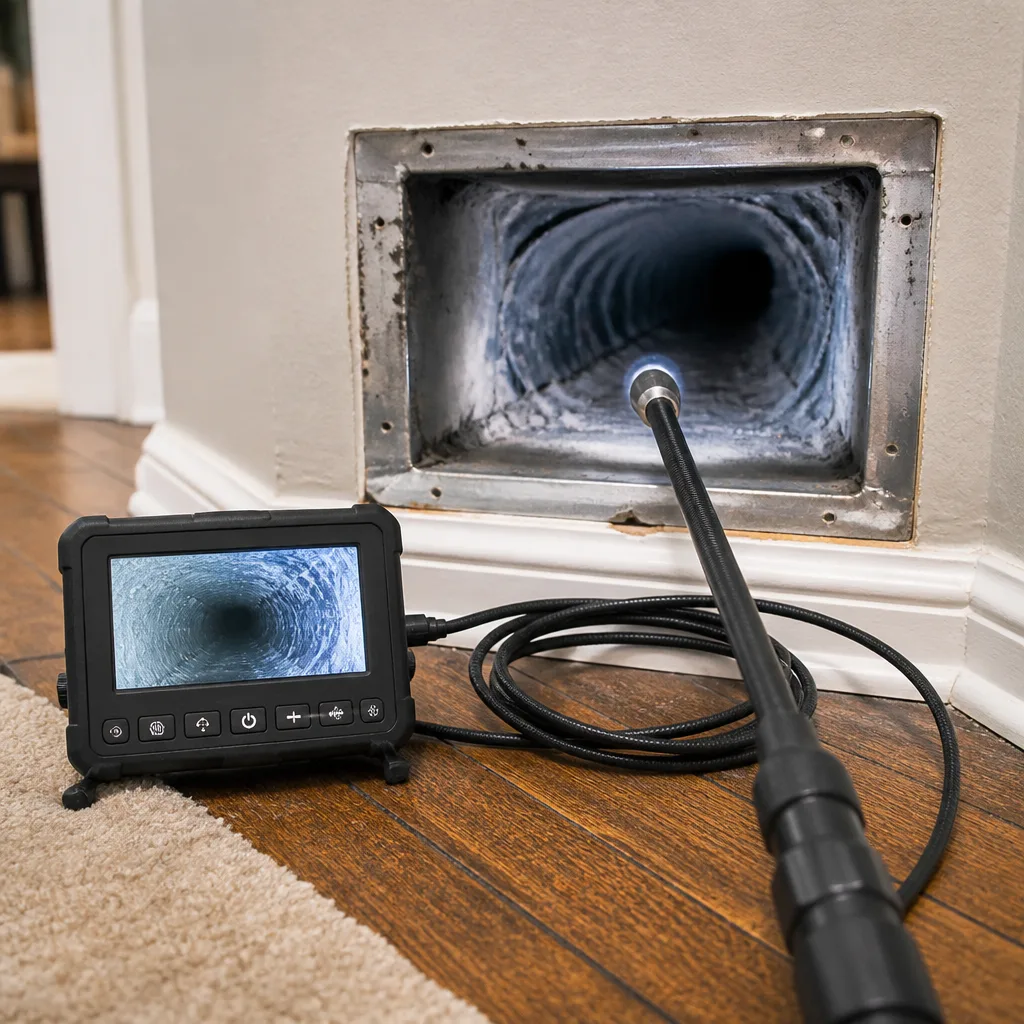 Camera inspection
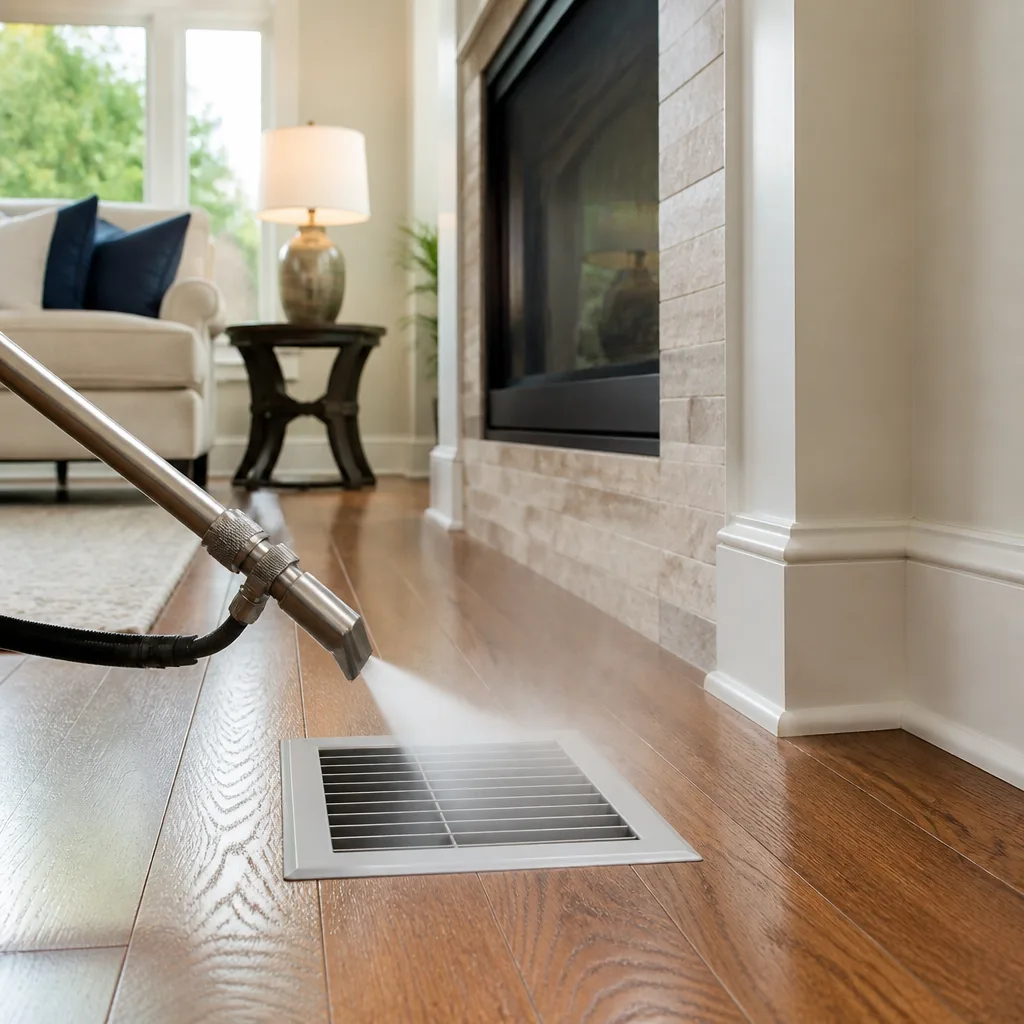 Sanitizing & deodorizing
Whole-system duct and dryer vent check with before-and-after photos - you see exactly what came out of your vents
That "$99 whole-house special" is a bait ad - the real number appears once they are in your hallway, or the "clean" is a shop-vac at the register. We photograph the inside of your ducts before and after instead.
Air Duct Cleaning Maintenance Checklist for University Park Homeowners
Replacing a furnace filter on schedule while never looking at your register grilles, your flex duct connections, or your blower compartment is like changing your car’s oil while letting the coolant run dry. The filter gets all the attention because it’s the only part of the system homeowners can see. Everything behind it – the trunk lines, the branch runs, the joints sealed with mastic that’s been drying out for a decade – degrades quietly, and by the time a University Park homeowner notices, a dirty duct has usually become a damaged one. This guide gives you a month-by-month audit framework: what you can check with no tools, what needs a screwdriver and a flashlight, and what always belongs to a professional with remediation-grade equipment. You’ll learn how to log static pressure, read the visual signals at each register, and build a baseline record that makes every future comparison honest.
Quick Answer
A home air duct maintenance checklist should combine monthly filter and register checks, seasonal visual inspections of accessible duct runs and the blower compartment, and a professional cleaning with documented before-and-after photography every two to five years depending on your home’s age, renovation history, and whether anyone in the household has allergies. In University Park, the checklist needs two extra triggers most generic guides skip: Santa Ana wind events, which push fine dust into every return, and renovation activity, which loads the system with construction debris that a standard filter won’t stop.
Styles & brands we work with
- Whole-home duct cleaning
- Dryer vent cleaning
- Camera inspection
- Sanitizing & deodorizing
Table of Contents
- The Month-by-Month Homeowner Checklist
- What You Can Check With No Tools
- What Needs Basic Tools
- What Always Needs a Professional
- Tracking Static Pressure as an Early-Warning Signal
- University Park Triggers: Wind Events, Renovations, and Filter Timelines
- Photographing and Logging Your Baseline After a Cleaning
- Common Mistakes to Avoid
The Month-by-Month Homeowner Checklist
The mistake most University Park homeowners make is treating duct maintenance as a single annual event. It isn’t. It’s a rhythm of small observations spread across the year, each one cheap in time and worth a lot in diagnostic value. Here’s how a working checklist looks when it’s broken into months rather than seasons.
Every month (no tools, five minutes):
- Look at every supply register. Dust streaks radiating outward from the grille mean air is escaping at the boot, not just dirt settling on the surface.
- Hold a tissue against each register for a few seconds. Weak or uneven airflow at one vent while others are strong is an early leak or blockage signal.
- Smell the air near the return. A musty or “gym locker” note that wasn’t there last month is worth writing down with the date.
- Check the filter for visible loading. In University Park, this matters more than in most places because fine dust from wind events coats filters fast.
Every quarter:
- Remove two or three register grilles and photograph the inside of the boot with your phone flash on. This builds a visual history you can compare against later.
- Run your hand along accessible flex duct in the attic or crawlspace, looking for kinks, sagging, or crushed sections.
- Vacuum the grille faces and the return cover with a brush attachment. Surface dust is harmless; letting it cake is not.
Annually:
- Open the air handler cabinet and inspect the blower wheel for dust buildup.
- Check condensate lines and drain pans if you have an air conditioning system in the attic, since standing moisture feeds biological growth that then travels through the ducts.
- Schedule or confirm your professional cleaning interval.
The point isn’t busywork. Each observation feeds the log you’ll build later in this guide, and that log is what turns a guess into a decision.
What You Can Check With No Tools
More of your system is legible to the naked eye than you’d expect. The key skill is knowing what a healthy register looks like versus one that’s telling you something.
Signs of surface contamination only:
- Even, light grey dust film across the entire grille face.
- Dust that wipes off easily and reveals clean metal or plastic underneath.
- No staining on the drywall or ceiling around the grille.
- Airflow that feels consistent across all registers in a room.
Signs of duct leakage:
- Dust streaks radiating outward from the register frame, like a sunburst. Air is escaping at the seam and carrying dust with it.
- Dark ghosting on the ceiling or wall right around the register opening – the same phenomenon, just on drywall.
- One register noticeably weaker than its neighbors while the others are strong.
- Whistling or hissing at a register, which points to a pressure imbalance or an undersized opening.
- Grille screws that are consistently loose, suggesting the boot has shifted.
That distinction between surface dust and leakage is the one homeowners get wrong most often. Surface contamination is a cleaning question. Leakage is a sealing question, and cleaning alone won’t fix it. In University Park, where many homes were built in the mid-twentieth century and have had duct systems modified by successive renovations, we see more boot and takeoff leakage than we do outright dirty trunk lines. Note what you see, with dates, and let a professional confirm it. Photographs taken with your phone from the same angle every quarter will show you drift you’d never catch otherwise.
What Needs Basic Tools
A screwdriver, a flashlight, a step stool, and a phone camera cover most of what a homeowner can safely do. Anything past that line belongs in the next section.
- Remove a register grille. Most are held by two screws. Set them in a cup so they don’t disappear into the carpet.
- Photograph the boot interior. Flash on, camera as close to the opening as you can get without a ladder. Capture the boot-to-floor transition and the takeoff where the branch connects to the trunk.
- Look for moisture staining. Brown rings, white efflorescence, or dark patches on the boot interior. Any of these means moisture is present, and moisture changes the job from cleaning to something else.
- Check the access panel on the air handler. With the system off and the breaker to the unit pulled, open the panel and shine a light on the blower wheel. A light dusting is normal; a heavy mat of grey felt is not.
- Inspect accessible flex duct. In an attic or crawlspace, walk the runs and look for crushed sections, disconnected collars, and sections sagging more than a few inches between hangers.
- Note your filter size and last replacement date on the new filter with a marker. It’s the simplest habit in this whole checklist.
Stop at the blower compartment. It’s the boundary line. It sits next to wiring and a capacitor, and someone who doesn’t work on HVAC systems daily shouldn’t be reaching into it. HVAC cleaning covers the coil, blower, and cabinet properly, and it’s a job for someone who does it every day.
What Always Needs a Professional
Three things in a duct system are genuinely dangerous or genuinely easy to damage: high-voltage components inside the air handler, gas-fired furnace heat exchangers, and the flexible duct systems themselves, which tear easily when someone with a shop vac tries to clean them.
- Contact with electrical components. The air handler cabinet contains line voltage, capacitors, and control boards. This is a trained-professional job, full stop.
- Anything involving the furnace or gas lines. If you smell gas, stop and call your gas utility. No duct work should be done in that situation.
- Source removal cleaning of the duct interior. A shop vac and a brush is not source removal. Real cleaning requires negative air pressure to keep contaminants from spreading through the house, HEPA filtration, and mechanical agitation of every branch. This is why professional equipment matters and why the equipment list on a company’s site is worth reading. air duct cleaning done properly uses systems like Rotobrush and Nikro, and remediation-grade gear like Abatement Technologies for containment, not a consumer vacuum with an extension wand.
- Sealing and repair. Mastic and mesh tape applied correctly to a leaking boot or takeoff is a long-term fix. Applied incorrectly, it peels within a season. If a duct is crushed or disconnected, that’s University Park Air Duct Cleaning Co territory, not a homeowner weekend project.
- Biological growth. Any visible mold inside the duct system – which you can’t safely assess yourself anyway – requires proper containment and treatment, not a spray bottle from the hardware store.
Our technicians have up to 10 years of experience with these systems, and the difference between a legitimate cleaning and a cosmetic one is invisible from the outside. That’s why the next section of this checklist adds a measurable signal.
Tracking Static Pressure as an Early-Warning Signal
This is the piece of the checklist almost no homeowner has, and it’s the single best early-warning indicator you can own for under the cost of a decent flashlight. Static pressure is the resistance inside your duct system. When it rises, air is being pushed through a narrower path than it should be – the causes range from a loaded filter to a collapsed flex run to a closed damper somebody forgot about. Tracking it over time tells you which of those is happening before you notice anything in the room.
A magnehelic gauge is the tool. It’s a mechanical differential pressure gauge that reads in inches of water column, typically available in a range suited to residential systems. Mount it near the air handler with a short length of tubing to a test port on the supply plenum, or use a handheld manometer with a static pressure probe if you prefer to check rather than monitor.
- Record the baseline. With a brand-new filter in place, measure and write down the value. Note the date, the filter brand, and the outdoor conditions.
- Measure on the same day each month. Consistency is what makes the numbers comparable. Same gauge, same port, same filter age.
- Log the filter change date next to each reading. You’re looking for the rate of rise, not just the absolute number.
- Watch for a step change. A gradual creep suggests filter loading. A sudden jump suggests something changed mechanically – a disconnected duct, a failed damper, a rodent intrusion.
- Compare after any professional work. A duct sealing job should lower the reading. If it doesn’t, the seal didn’t take.
A rising number isn’t a diagnosis on its own, but it’s a reason to look closer. We use static pressure as one input when we assess a system, alongside visual inspection and airflow measurement. For a homeowner, the goal is simpler: notice the rise, note it, and call before the compressor has been pushing against a restricted system for a year.
University Park Triggers: Wind Events, Renovations, and Filter Timelines
A generic maintenance calendar doesn’t reflect what actually happens to ducts in University Park. Three local realities need to be added to the standard rhythm.
Santa Ana wind events. When the Santa Ana winds arrive, they carry fine dust and particulate through the region, and homes in University Park take it in through every crack and every return. After a sustained wind event, check your filter. It’s the fastest filter-loading trigger we see in this area, and it doesn’t respect your calendar. Photograph the filter and note the date; a pattern will emerge over a couple of seasons that teaches you how many days after a wind event to look.
Renovation activity. Any interior work – drywall, flooring, cabinetry, painting – loads the system with construction dust that a standard filter can’t capture. During renovation, the return should be sealed off, and the system should stay off when the trades aren’t using it. After renovation, a full professional cleaning is the right answer, not a filter change and hope. This is doubly true in older University Park homes where original duct systems have been modified through successive remodels and already have more seams than they were designed for.
Filter upgrade timelines. Higher MERV isn’t automatically better. Every step up in filtration is a step up in resistance, and if the system wasn’t designed for it, the blower pays the cost. Move up one MERV step at a time, log the static pressure before and after, and hold there for a full filter cycle. If the reading rises noticeably, step back down. Honeywell and Aprilaire filter cabinets and media filters are built for residential systems and give you better filtration without guessing at the trade-off, and we can size and install them as part of an air quality visit rather than as a separate job.
A note on humidity. University Park’s dry summer air is easy on duct systems in one respect – less biological growth than a humid climate would produce. But dry air also lets fine dust stay airborne longer, which is why filter loading matters more here than it might elsewhere.
Photographing and Logging Your Baseline After a Cleaning
Here’s where most homeowners lose the value of a professional cleaning: they don’t document it. Without a baseline record, the next cleaning can’t be compared to anything, and you’re back to taking someone’s word for it. Fix that by building a proper record the day the work is done.
- Ask for before-and-after photos of every register and every return, with the grille off. Legitimate companies take these anyway. Get them in a digital folder the same day, not “we’ll email them.”
- Photograph the trunk line interior at the main access point, and both sides of the air handler cabinet.
- Record the static pressure reading before and after. If the company doesn’t offer one, ask; a clean system has a number.
- Note the date, the equipment used, and the technician’s name removed – just the company and the date. Add a photo of the filter that went in afterwards, with the MERV rating visible.
- Label the folder with the year and the trigger (“2026, post-renovation” or “2026, standard interval”). Future you will know exactly why the cleaning happened.
- Add three reference photos of your own – one return grille, one supply register, and one accessible flex run – taken from marked spots you can find again.
Keep the folder in cloud storage and add a one-page written summary with the date of any duct repair or sealing work done. Then, at each quarterly check, compare this quarter’s register photos against the baseline. You’re not looking for a clean duct; you’re looking for change. Change is what warrants a call.
When you do have the ducts cleaned, we include before-and-after photography as part of the job, and we use the same visual language at every register so the record is actually useful five years later. One flat price per system is agreed before work starts, and the price is set by the written estimate.
Common Mistakes to Avoid
- Cleaning the ducts but not sealing the leaks. Clean ducts are only half the job. A newly cleaned system with leaking boots sends conditioned air into the attic from day one and pulls dust back in through every gap.
- Using a shop vac on flex duct. Flex duct has an internal liner that tears easily. One torn liner becomes a collapsed run and a repair bill that dwarfs the cleaning cost. This is professional work.
- Changing the filter and calling it maintenance. The filter is one line item on the checklist. Registers, boots, accessible runs, the blower compartment, and static pressure are the rest.
- Ignoring the dryer vent because it’s a separate system. Dryer vent cleaning is a fire-safety service, not an HVAC accessory. Lint accumulates inside the vent run and can’t be reached by pulling out the screen. If you haven’t had the vent inspected in years, that’s a genuine hazard, and it’s cheap to address as a standalone visit.
- Skipping the post-renovation cleaning. Construction dust is finer and more abrasive than household dust, and it settles into the duct system for months. Waiting a year defeats the point.
- Stepping up to a high-MERV filter without checking the pressure. A filter that restricts airflow forces the blower to work harder and can shorten the life of the system. Always log the reading before and after.
- Not asking what equipment will be used. A coupon-level cleaning with a shop vac doesn’t physically remove the settled debris in a branch run. Ask about the equipment before you book, and read the answer carefully.
See the difference
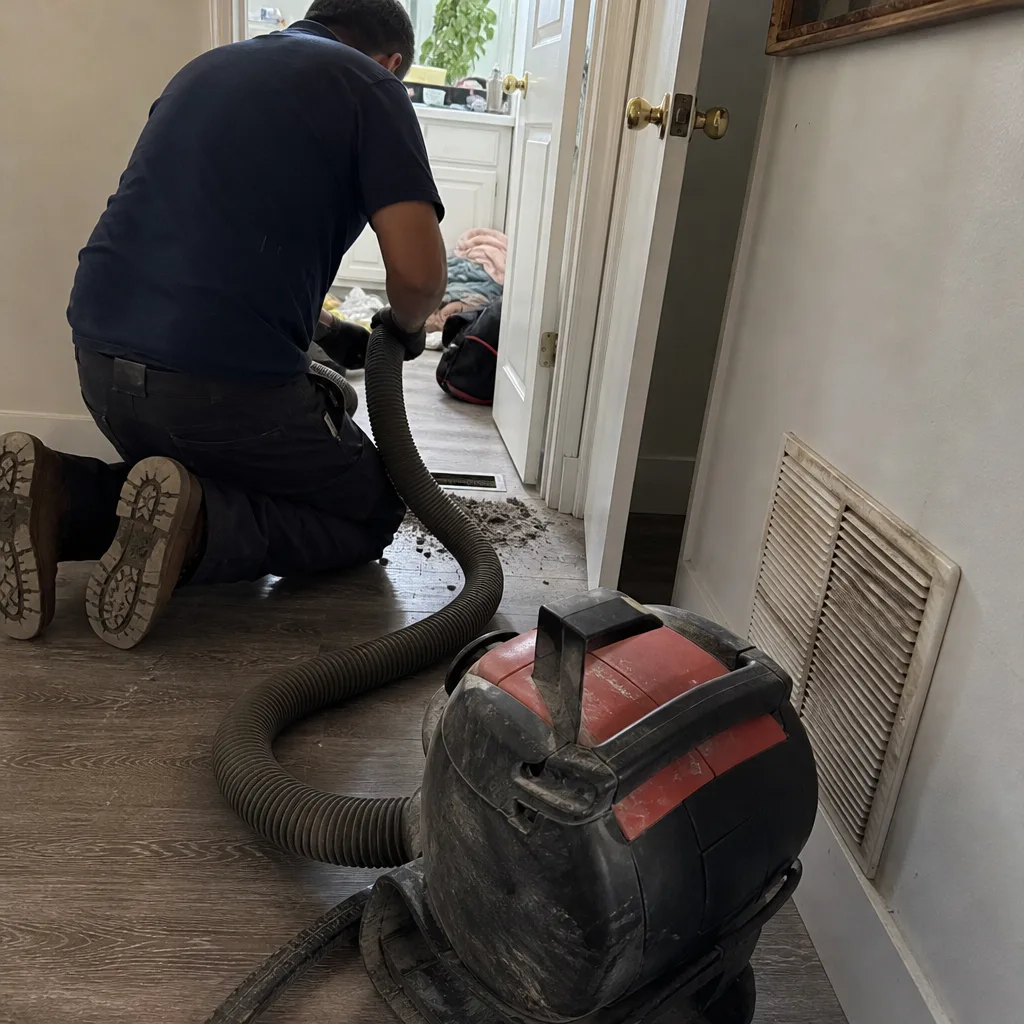 Before
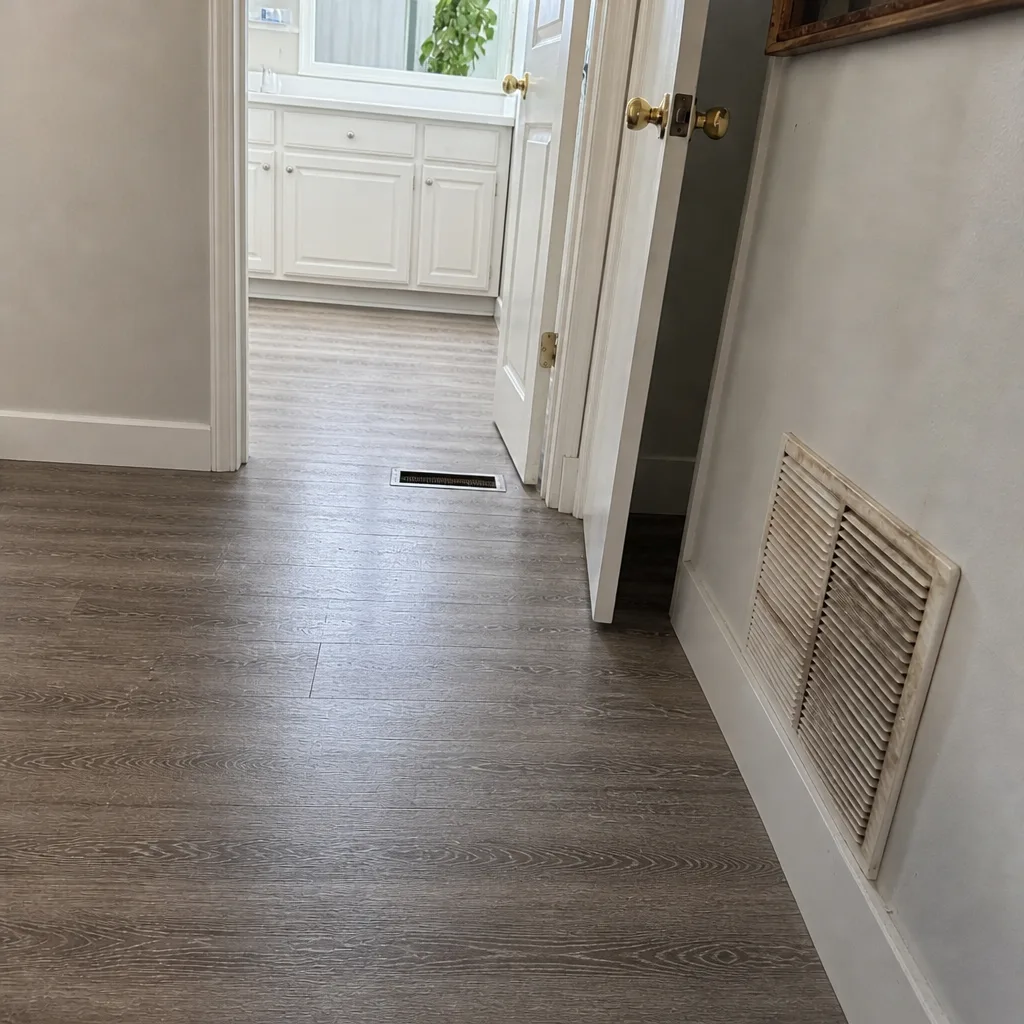 After
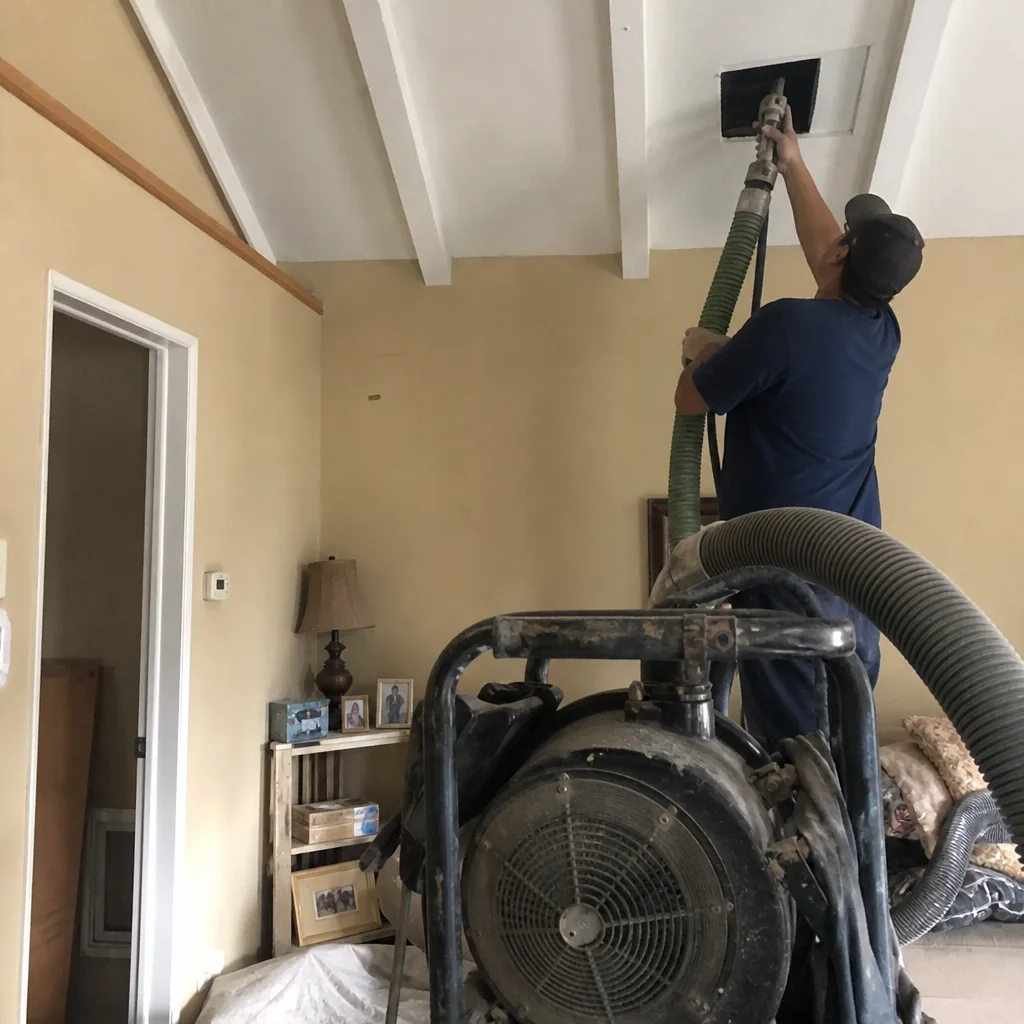 Before
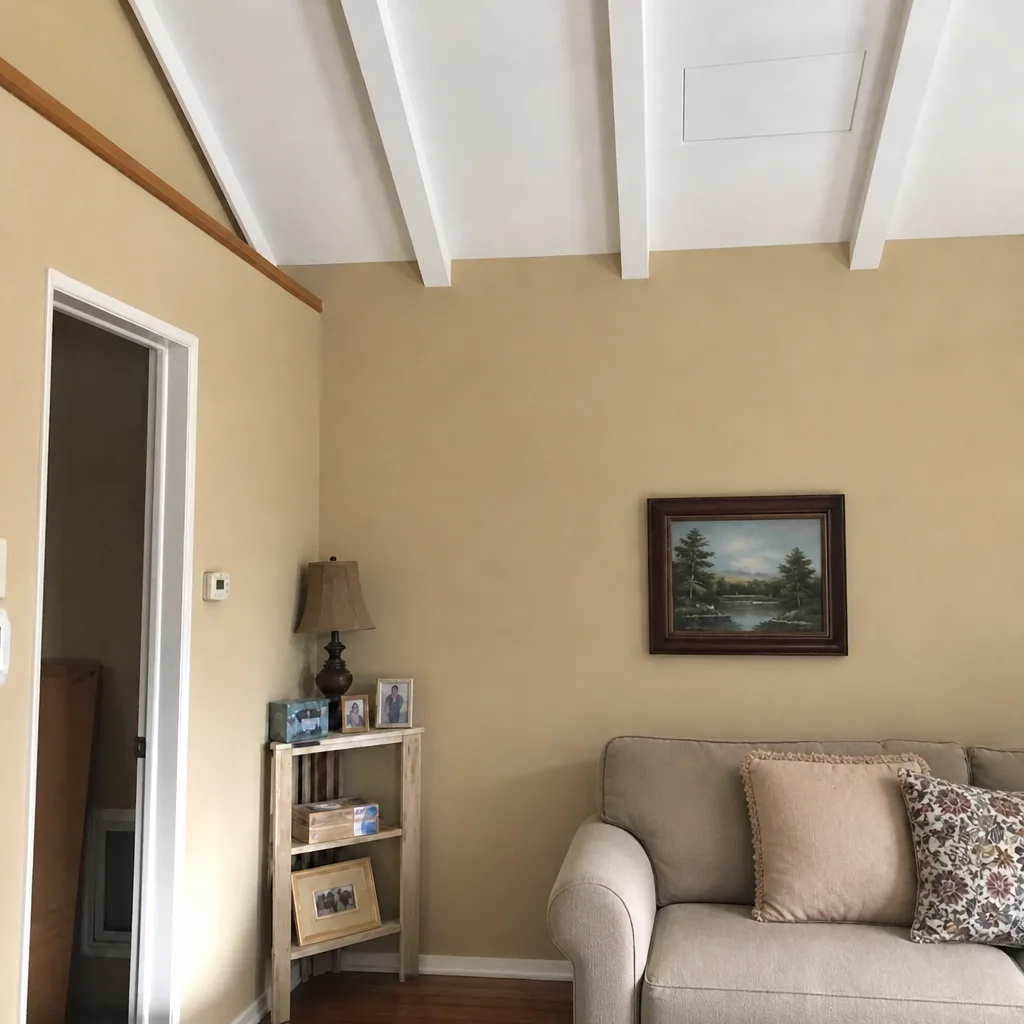 After
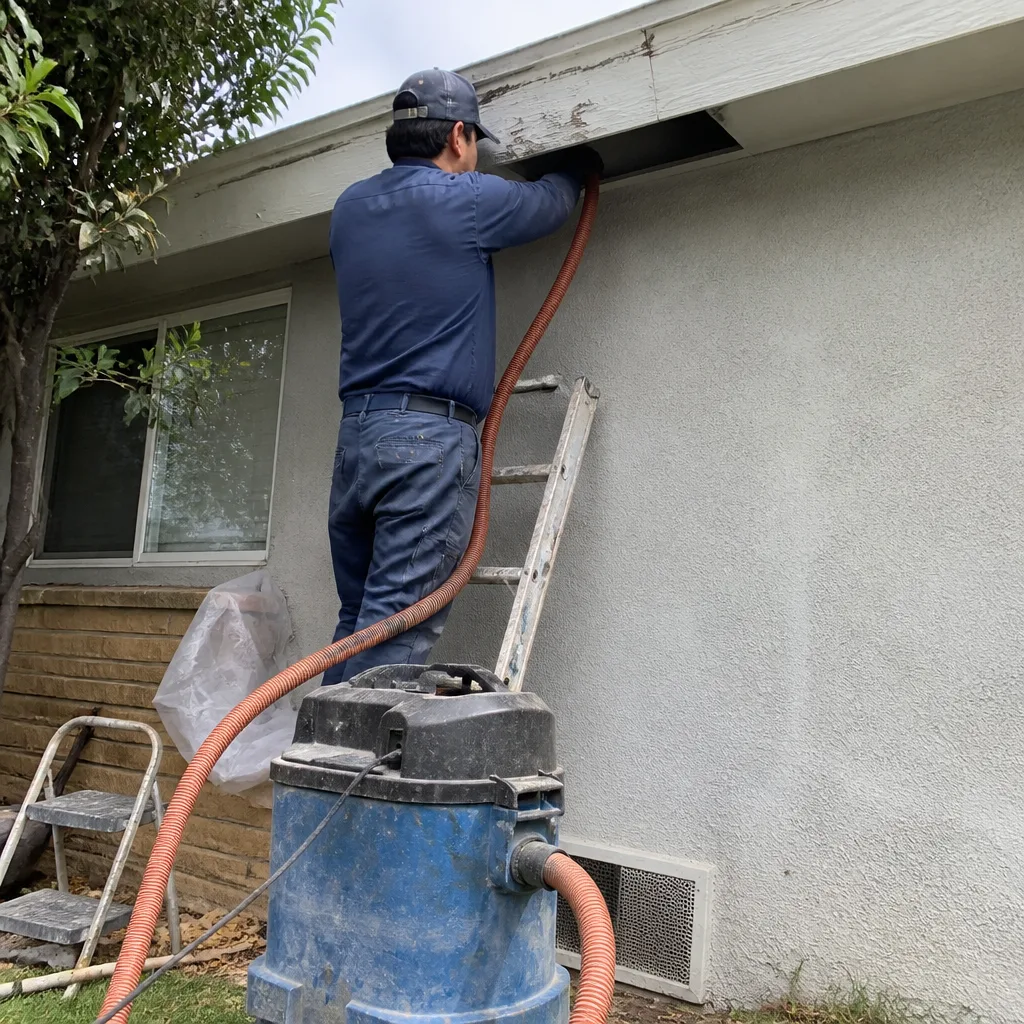 Before
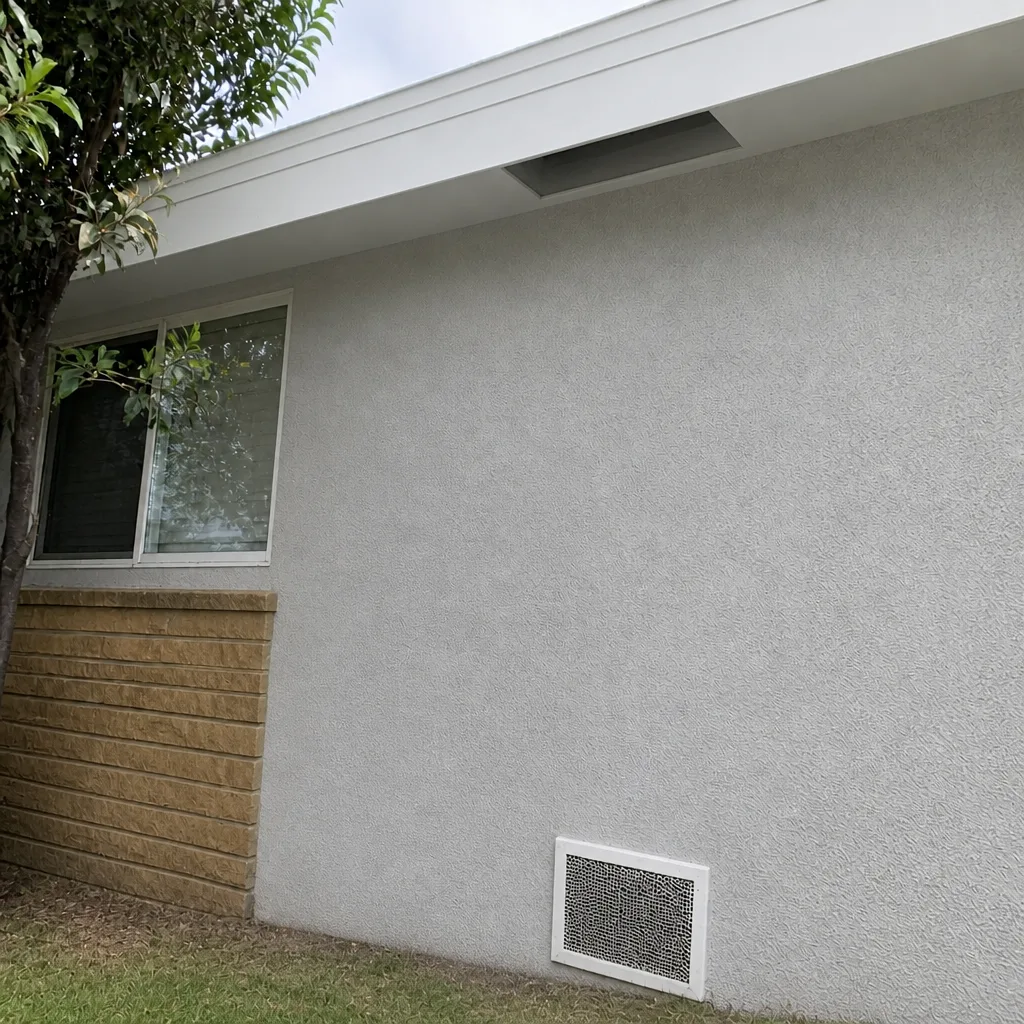 After
When to Call a Professional
Call a professional immediately if you find visible mold inside a duct, if you smell gas anywhere near the air handler, if a register has gone completely dead while the others are strong, or if an accessible flex run has come off a collar. Those are safety-and-repair issues, not maintenance items. Call and book a cleaning if any of the following apply: you’ve just finished a renovation; the system hasn’t been professionally cleaned in two to five years; a household member has developed new allergy symptoms you can’t trace to anything else; a wind event has left visible dust throughout the house; or an inspection turned up biological growth or debris in the ducts. University Park Air Duct Cleaning Co offers free estimates in University Park – call (866) 947-8605. We answer 24/7. Fast dispatch from 7am to 7pm, Sunday through Friday.
Frequently Asked Questions
Every two to five years is the useful range for a typical University Park home. The low end is for older homes with a renovation history or a household member with allergies; the high end is for newer construction with well-sealed ducts and no pets. A wind event or renovation resets the clock, so log both and let them guide you.
Surface dust sits evenly on the grille face and wipes off cleanly. A duct leak leaves dust streaks radiating outward from the frame, or dark ghosting on the drywall around the register opening, and often shows up as weak or uneven airflow. Surface dust is a cleaning question. Leaks are a sealing question.
No. Source-removal duct cleaning requires negative air pressure, HEPA filtration, and mechanical agitation that a shop vac cannot deliver. Trying it usually distributes debris through the house or tears the flex duct liner. Leave it to a professional with proper equipment.
Because it changes before you notice anything. A slow rise tells you the filter is loading or the system is getting restricted while the rooms still feel comfortable. It’s the earliest measurable warning signal you can buy for your own home.
Ask what equipment they use, whether they do source-removal cleaning with negative air pressure and HEPA containment, whether they take before-and-after photos of every register, and whether they offer repair and sealing as part of the same visit. Ask what the price per system is, and whether it includes everything. One flat price per system agreed before work starts is a reasonable standard. We can walk you through what to expect and give you a free estimate – call (866) 947-8605. We answer 24/7. Fast dispatch from 7am to 7pm, Sunday through Friday.
Sometimes, and sometimes not. Cleaning removes the settled debris, but if the source is a leaking boot pulling attic dust into the system, or an undersized filter cabinet, cleaning alone won’t fix it. That’s why the checklist in this guide includes sealing, repair, and filter upgrades. Air quality improvements during a service visit let you address the source in the same trip.
The Bottom Line
A maintenance checklist that only reminds you to change the filter is missing most of the system. The working version of this guide is an audit framework: monthly register observations with no tools, quarterly flashlit photographs with basic tools, and professional cleaning and sealing on a two-to-five-year cadence or after any renovation or wind event. Add a magnehelic gauge for static pressure tracking, and add a documented photo baseline after every professional visit. That combination catches degradation between cleanings, lets you act before a dirty duct becomes a damaged one, and gives you something to actually compare against next time. Add dryer vent cleaning on the same rhythm and you’ve covered the whole system. If you’d rather hand the checklist to someone with the right equipment, call (866) 947-8605 for a free estimate. We answer 24/7. Fast dispatch from 7am to 7pm, Sunday through Friday.
Written by the team at University Park Air Duct Cleaning Co.