
Last updated November 24, 2026
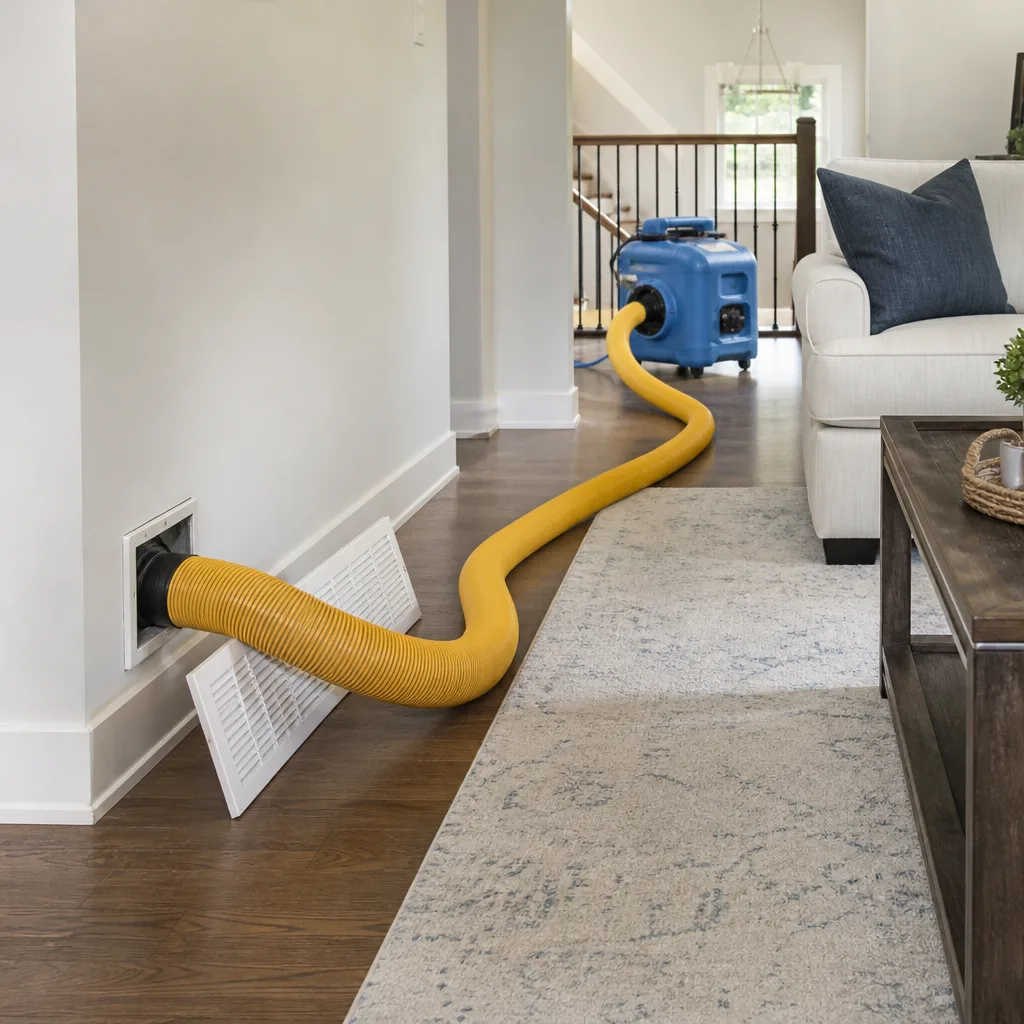 Whole-home duct cleaning
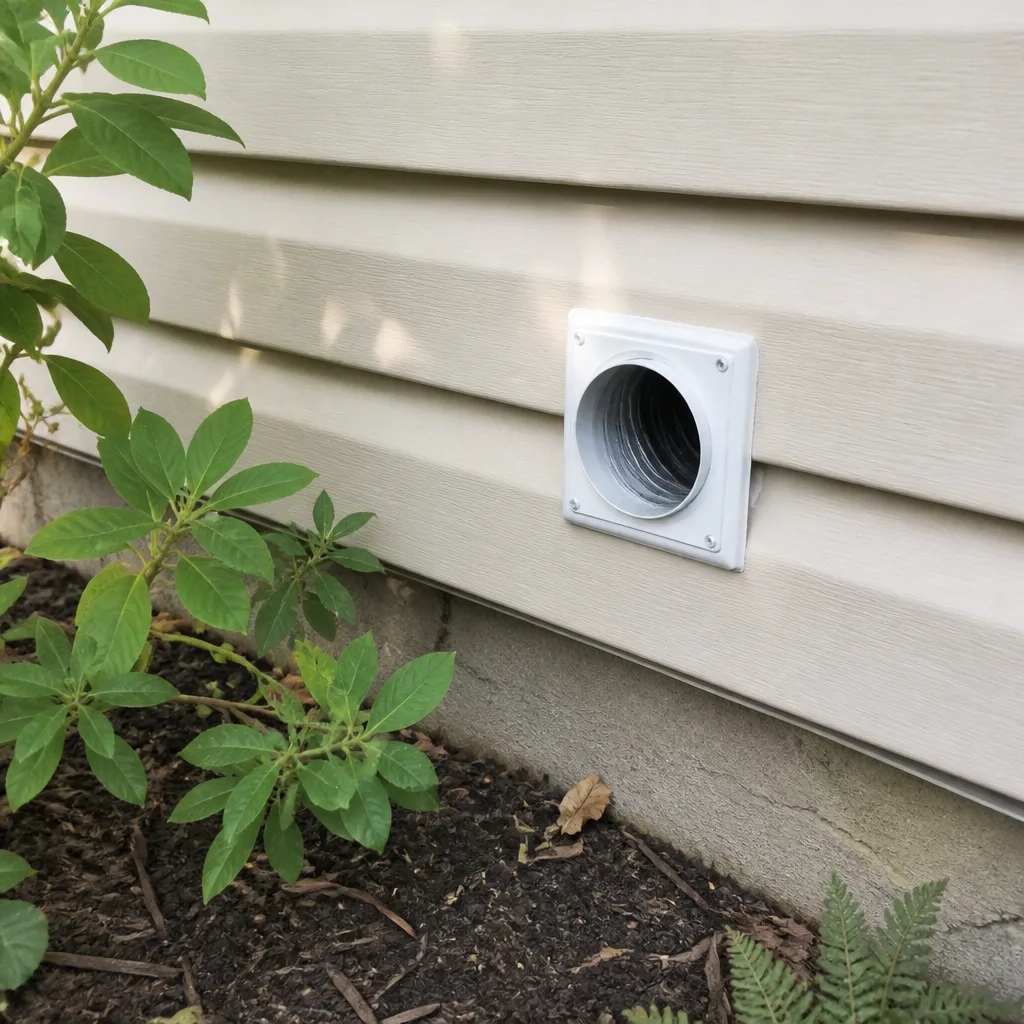 Dryer vent cleaning
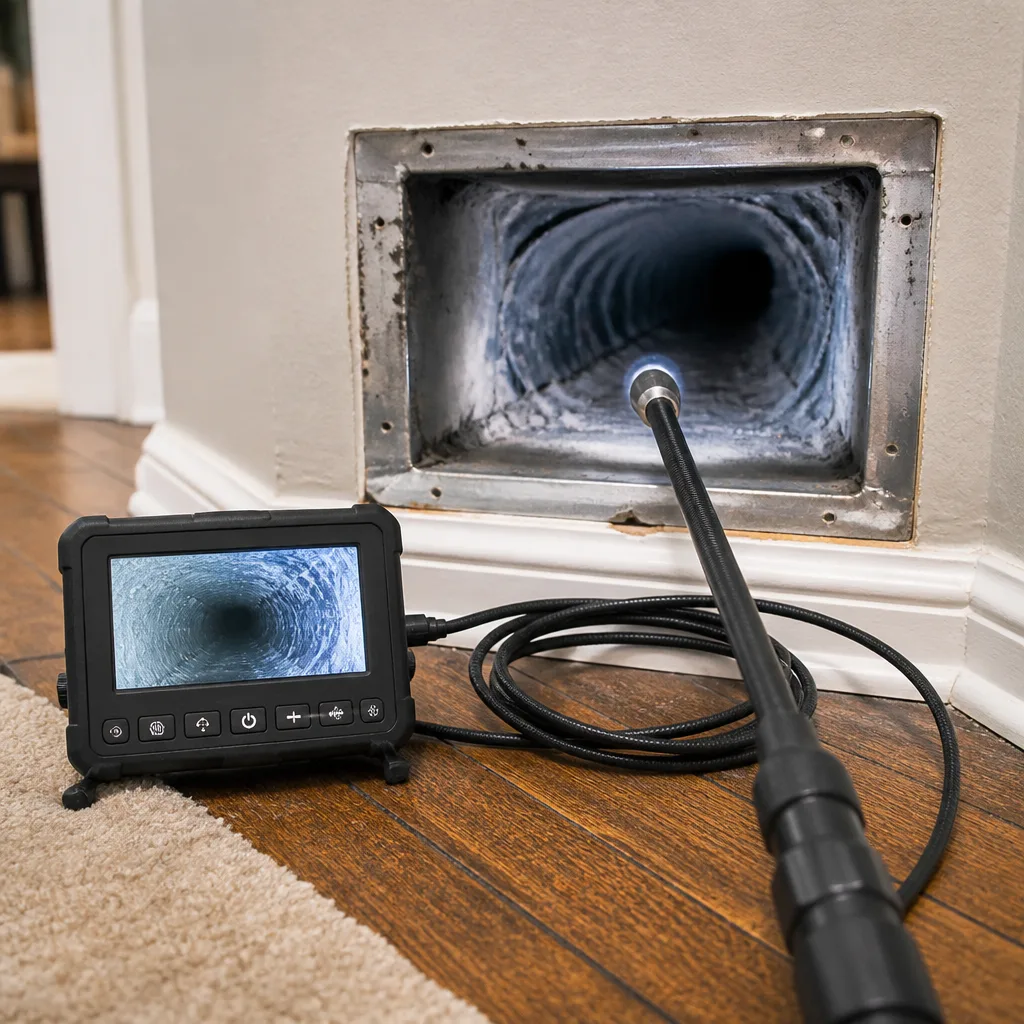 Camera inspection
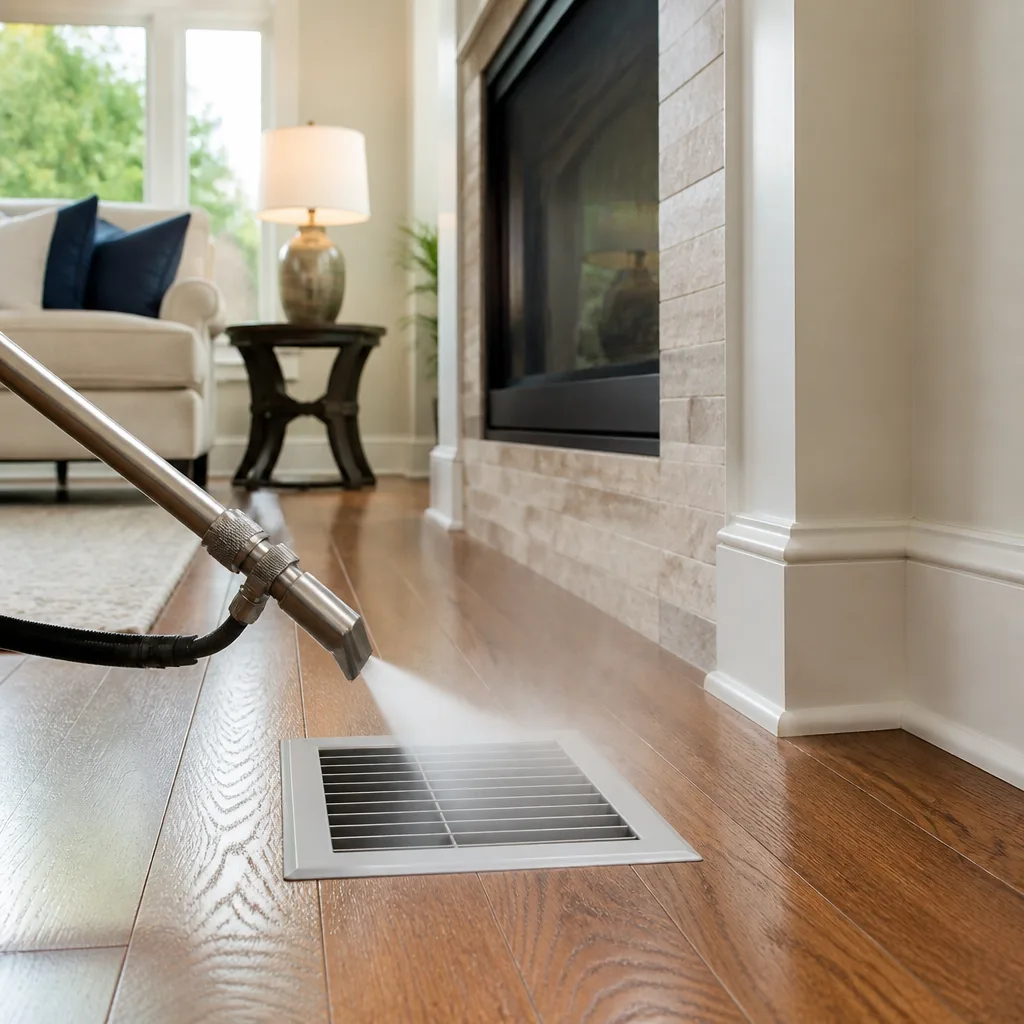 Sanitizing & deodorizing
Whole-system duct and dryer vent check with before-and-after photos - you see exactly what came out of your vents
That "$99 whole-house special" is a bait ad - the real number appears once they are in your hallway, or the "clean" is a shop-vac at the register. We photograph the inside of your ducts before and after instead.
Air Duct Cleaning Cost Breakdown: The University Park Homeowner’s Reference for 2026
The advertised per-vent price is the least useful number in any duct cleaning estimate. It tells you nothing about how many vents your system actually has, how hard they are to reach, how contaminated the ducts are, or what equipment shows up in the driveway. Two quotes for the same University Park house can land at $99 and $900 and both be “real” numbers, because one is a contact-vacuum surface pass and the other is a source-removal job. This guide breaks down every cost variable, gives realistic 2026 University Park ranges, and shows you how to compare written scopes instead of headline prices.
Quick Answer
Air duct cleaning in University Park typically runs $350 to $700 for a standard residential system, with whole-home jobs on larger or heavily contaminated systems landing between $700 and $1,500. Add-ons like dryer vent cleaning, duct sealing, and sanitizing each carry their own line-item cost, usually $100 to $400 depending on scope. The written estimate, based on your system’s actual size, access, and contamination level, sets the final price.
Styles & brands we work with
- Whole-home duct cleaning
- Dryer vent cleaning
- Camera inspection
- Sanitizing & deodorizing
Table of Contents
- The Anatomy of a Duct Cleaning Invoice
- Why Square Footage Is a Poor Proxy for Job Complexity
- Source Removal vs. Contact Vacuum: What the Price Gap Actually Buys
- Add-On Services Decoded: Which Ones Have Measurable ROI
- Dryer Vent Cleaning: The Safety Line Item Worth Budgeting For
- Equipment Quality and What It Costs You
- How to Compare Quotes Apples-to-Apples
- University Park Climate, Housing Stock, and Duct Contamination
The Anatomy of a Duct Cleaning Invoice
Every legitimate duct cleaning quote in University Park breaks down into three layers: the base service, the add-ons, and remediation upgrades if contamination turns out to be worse than expected. Understanding which layer each dollar sits in is the whole game. Most confusion comes from homeowners comparing a base-service-only quote against a quote that bundles add-ons, then assuming one company is “cheaper.”
Layer 1: The Base Service
This is the source-removal cleaning itself: negative-pressure containment, agitation of the duct interior, HEPA filtration, and the labor to do it properly across every supply and return run. For a single-family University Park home in the 1,800 to 2,500 square foot range, this layer typically runs $350 to $550. Larger homes, multiple HVAC zones, or long duct runs push it toward $600 and up.
Layer 2: Standard Add-Ons
| Add-On | Typical 2026 University Park Range |
|---|---|
| Dryer vent cleaning (standalone) | $125 – $225 |
| Duct sealing (accessible joints and runs) | $250 – $450 |
| Antimicrobial fogging / sanitizing treatment | $150 – $350 |
| UV-C in-duct air purifier install (Honeywell or Aprilaire) | $400 – $800 |
| Return duct cleaning, if not included in base | $75 – $150 |
Layer 3: Remediation Upgrades
If the inspection turns up mold, rodent contamination, or heavy debris from a renovation, the job moves from cleaning into abatement territory. That means HEPA containment and negative air pressure from equipment like Abatement Technologies units, which is a different tier of work and priced accordingly. Expect $800 to $1,800 for remediation-level cleaning on a typical University Park home, and understand that a company without abatement-grade equipment cannot do this job properly no matter what they quote. Call (866) 947-8605 for an exact quote – estimates are free.
Why Square Footage Is a Poor Proxy for Job Complexity
Square footage is the number every online quote calculator asks for, and it is close to useless. A 3,000 square foot University Park house with a single-zone system and easy attic access can be a simpler, faster job than a 1,800 square foot house with three zones, a crawlspace spaghetti of flex duct, and returns buried behind drywall. Labor is time, and time is driven by system geometry, not floor area.
The Factors That Actually Drive Labor
- Number of zones: Each additional system or zone means a fresh round of containment setup, additional air handler work, and more trunk line. Multi-zone University Park homes add real hours.
- Flex duct percentage: Rigid metal duct cleans fast because agitation tools run smoothly inside it. Flex duct has ridges, sags, and tighter bends, which slows the work and demands gentler agitation so the liner is not damaged.
- Accessibility: Ducts buried in finished ceilings, returns without access panels, and air handlers in tight closets all add labor. Some University Park homes need access panels cut before work begins, and that gets priced in.
- Return duct layout: A simple return plenum is quick. A home with returns running through interior walls needs more setup and more time.
- Contamination level: A freshly built University Park property needs a light cleaning pass. A mid-century home that has never had ducts cleaned, or one following a renovation, needs heavier agitation and often a second pass.
This is why we ask about zones and duct type before we quote, not just square footage. A technician with up to 10 years of experience can usually predict a job’s labor from those five factors alone.
Source Removal vs. Contact Vacuum: What the Price Gap Actually Buys
Two methods dominate residential duct cleaning, and the price gap between them is the single biggest driver of “why are some quotes so much cheaper.” A contact-vacuum job puts a shop-vac-class machine at each register and pulls loose surface dust toward it. A source-removal job, the method the National Air Duct Cleaners Association (NADCA) sets as the industry standard, seals the system under negative pressure, uses mechanical agitation to dislodge debris from the duct walls, and captures everything through HEPA filtration before the system is returned to service. Contact vacuuming cleans the top layer of one surface. Source removal takes the accumulated load out of the whole system.
When the Gap Is Justified
- Heavy accumulation, visible dust plumes from registers, or debris that settles back within days: you need source removal.
- Post-renovation cleanup: drywall dust and construction debris require real containment, not a surface pass.
- Allergy or asthma concerns: the goal is removing the reservoir, and only source removal does that.
- Mold or moisture issues: this is remediation territory and needs abatement-grade equipment.
When It Might Not Be
If ducts were properly cleaned recently and you’re just doing a light maintenance pass, a contact-vacuum service can be adequate. Be honest with yourself about which scenario you’re in, because a $99 contact-vacuum special sold as “full duct cleaning” against a $550 source-removal quote is not a fair comparison. It’s a different product.
Add-On Services Decoded: Which Ones Have Measurable ROI
Add-ons are where duct cleaning invoices get confusing, and where upsells hide. Some add-ons solve a real problem and are worth the money. Others are sold on vague benefit language. Here’s the honest breakdown.
High-Value Add-Ons
- Dryer vent cleaning: Clear ROI as a fire-safety item, and it improves dryer efficiency. Lint accumulation in a dryer vent is a documented fire risk, and this is a standalone service worth booking even when ducts don’t need cleaning.
- Duct sealing: Measurable on the energy bill if your University Park home has leaky joints in accessible duct runs. Not worth it if the leaks are in inaccessible sections you can’t reach anyway.
- Return duct cleaning (when not bundled): Returns carry the heaviest dust load in most homes. Make sure your base quote includes them.
Add-Ons to Scrutinize
- Antimicrobial fogging: Useful after remediation or confirmed microbial growth. Not something you need on routine maintenance cleaning. If a company pushes fogging on every job without inspecting first, that’s a red flag.
- UV-C in-duct purifiers: Worth considering for households with allergy or asthma concerns, particularly with a Honeywell or Aprilaire unit that’s properly sized for the air handler. Not a substitute for a clean system, though.
- “Duct sanitizing” as a line item separate from fogging: Ask exactly what product is being applied and why. If the answer is vague, skip it.
Order add-ons by inspection, not by sales script. A technician who inspects first and recommends second is the one worth hiring. Call (866) 947-8605 for an exact quote – estimates are free.
Dryer Vent Cleaning: The Safety Line Item Worth Budgeting For
Dryer vent cleaning is the one item on this guide most likely to save a University Park homeowner from a genuine emergency. Lint is highly flammable, and a vent packed with lint traps heat in the dryer and in the duct run. It’s also one of the cheapest items on the invoice.
What Drives the Cost
- Vent length and routing: A short straight run to an exterior wall is the cheapest job, typically $125 to $180. Long runs, multiple elbows, or vents that exit through the roof push the cost toward $225.
- Access: Vents behind the dryer with no clearance take longer to reach and clean properly.
- Condition: Heavy lint compaction, or a vent with damage, adds labor. A blocked vent that has been ignored for years can require dedicated clearing equipment.
Book dryer vent cleaning as a standalone service, and consider combining it with a duct cleaning visit to make the most of the trip. It is a separate service from duct cleaning and should be quoted separately. You can read more about our dryer vent cleaning service if lint safety is your main concern.
Equipment Quality and What It Costs You
Equipment is the invisible cost variable in every duct cleaning quote. A company running consumer-grade vacuums is running a cheaper job by definition, and the quote reflects it. Professional platforms like Rotobrush and Nikro are the same machines commercial HVAC contractors use, and they cost real money to buy, maintain, and train technicians on. That cost sits inside every honest quote, and its absence is the biggest reason some quotes look unrealistically low.
What the Machines Actually Do
- Containment setup: Seal the system and put it under negative pressure so dislodged debris can’t migrate into living space.
- Mechanical agitation: Rotobrush and Nikro tools run inside the duct to scrub the walls and drive debris toward the collection point.
- HEPA filtration: Capture everything at fine-particle level, which requires real filtration capacity, not a shop vac filter bag.
- Containment for remediation: Abatement Technologies equipment provides HEPA filtration and negative air pressure at remediation level, which is what separates a cleaning from an abatement.
- Post-clean verification: Visual and equipment checks that the source was actually removed.
When we quote a University Park job, we quote for the equipment the scope requires. If you want the full picture of what a professional cleaning visit involves, our air duct cleaning page walks through the process step by step, and our HVAC cleaning page covers the air handler side of the job.
How to Compare Quotes Apples-to-Apples
The only fair way to compare duct cleaning quotes is to compare written scopes of work, not headline prices. A written scope removes the guesswork and shows you exactly what each company is proposing to do, and for how much, before anyone shows up.
What a Written Scope Should Include
- System details: Number of zones, approximate duct length or register count, and duct type (rigid metal, flex, or mixed).
- Method: Specifically “source removal with negative-pressure containment and HEPA filtration,” or something else. If the method isn’t stated, ask.
- Every item being cleaned: Supply runs, return runs, air handler, registers, and grilles. Line-item each one.
- Add-ons, individually priced: Dryer vent cleaning, sealing, sanitizing, UV install, each as a separate line item.
- Access work: Whether cutting access panels is included or billed separately.
- Estimated duration: A real source-removal job on a typical University Park home runs 2 to 4 hours. A 30-minute visit is a surface pass.
- The final price in writing: The signed estimate is the number that matters, not the advertised special.
Ask each company for a scope in this format. The quotes that arrive with detail behind them are the ones worth keeping. Call (866) 947-8605 for an exact quote – estimates are free.
University Park Climate, Housing Stock, and Duct Contamination
University Park’s mild winters and warm, dry summers mean duct systems here don’t face the extreme temperature swings that hammer systems in harsher climates. What that means in practice: ductwork degrades slowly, and contamination tends to be a buildup story rather than a sudden failure story. Acoustic lining and flex duct don’t get the freeze-and-thaw stress that eventually cracks rigid metal in colder regions, so the main driver of contamination here is time and use, not weather.
Housing Stock Patterns
University Park covers a wide range of building ages and construction styles, from mid-century homes to newer construction. The older the house, the more likely it is that ducts have never been cleaned, or that flex duct has sagged and collected dust at the low points. Newer construction tends to bring a different problem: drywall dust and construction debris in the ducts from the building process itself. Both scenarios affect the cost of the job and the scope you should be quoted.
- Mid-century homes: Expect heavier accumulation, more likely to need remediation-level care, and often harder access.
- Newer builds: Construction debris is common, and a first cleaning is often a good idea before move-in.
- Renovations: Any University Park home that has had interior work done in the last few years should be on a nearer cleaning schedule than the standard recommendation.
- Property managers: Multiple units in the same building benefit from a single coordinated scope and predictable pricing.
We work with Honeywell and Aprilaire products when a home needs an air-quality upgrade installed at the same time as cleaning, and Guardsman-grade sanitizing treatments when the inspection calls for it.
Common Mistakes to Avoid
- Comparing a base-service quote against a bundled quote. Get a line-item scope from every company you consider, or you’re comparing two different products and the cheaper number means nothing.
- Assuming square footage predicts the price. Ask about zones, duct type, and access instead. A 3,000 square foot University Park home with one zone can cost less to clean than a 1,800 square foot home with three.
- Booking a $99 “full duct cleaning” special without asking the method. If the answer is “contact vacuum” and the ducts are heavily contaminated, the cheap price is buying you a surface pass, not source removal.
- Skipping the return duct line item. Returns carry the heaviest dust load. If they’re not listed in the scope, ask whether they’re included.
- Buying sanitizing add-ons sight unseen. Sanitizing is a fix for a specific problem, not a routine item. Insist on an inspection before it’s recommended.
- Ignoring the dryer vent because the dryer “still works.” Functioning isn’t the same as safe. Lint buildup in a University Park dryer vent is a real hazard and a $125 to $225 item.
- Rejecting a company just because their quote is higher. Check whether the higher number included remediation-grade equipment, full return coverage, or a scope the cheaper quote skipped.
See the difference
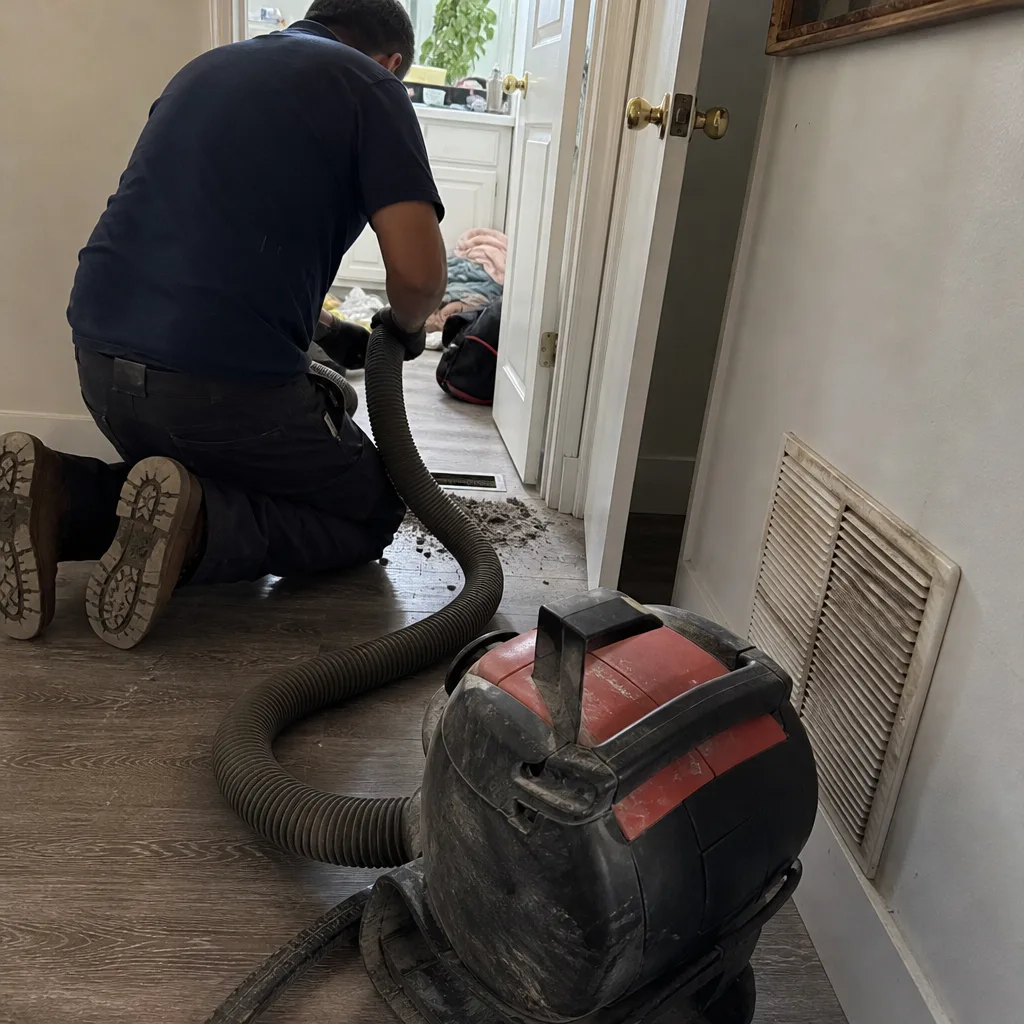 Before
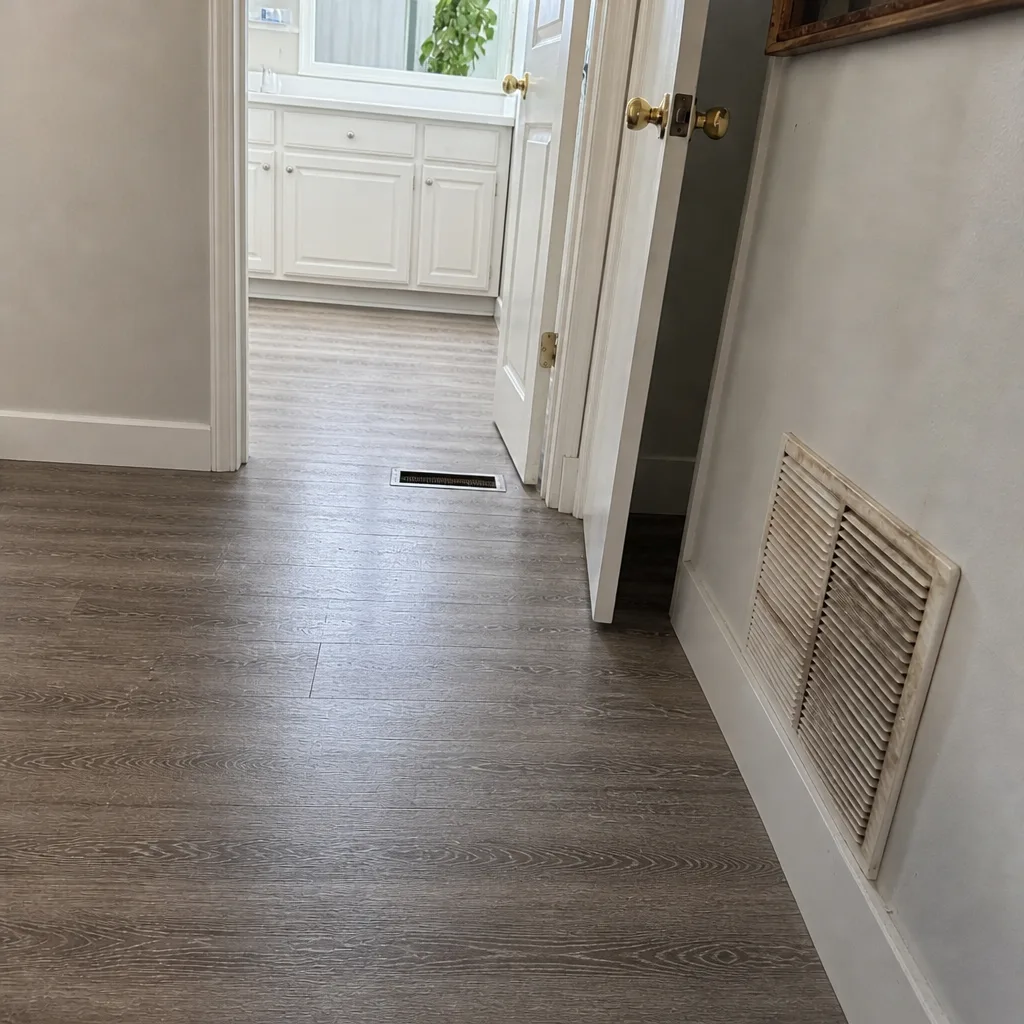 After
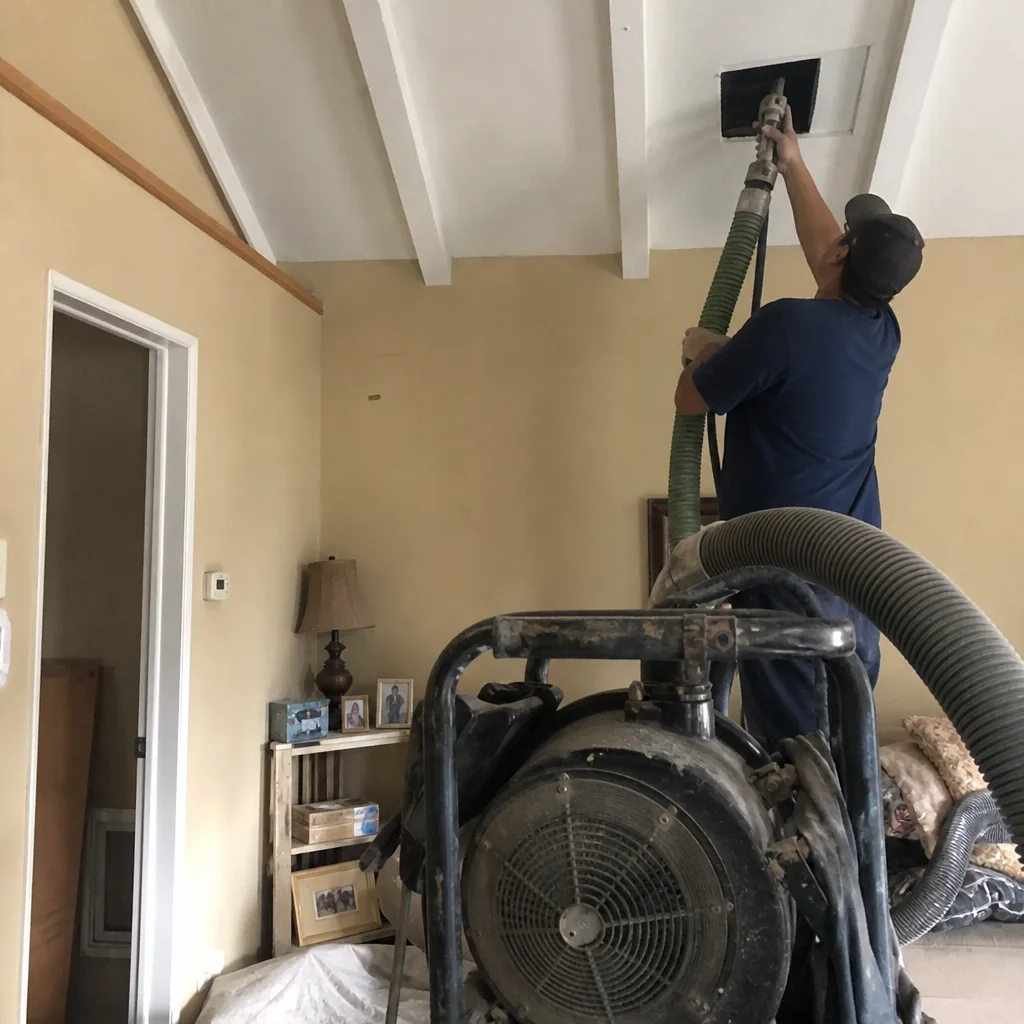 Before
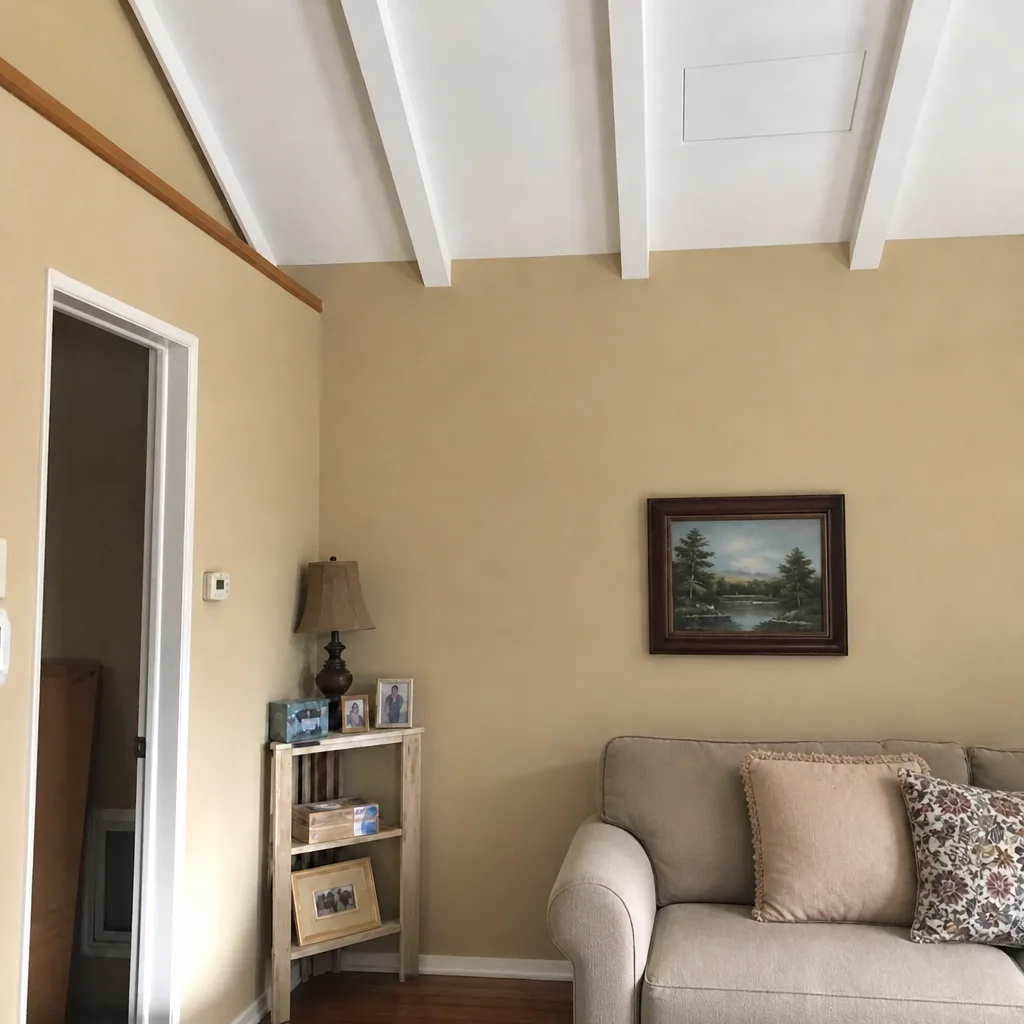 After
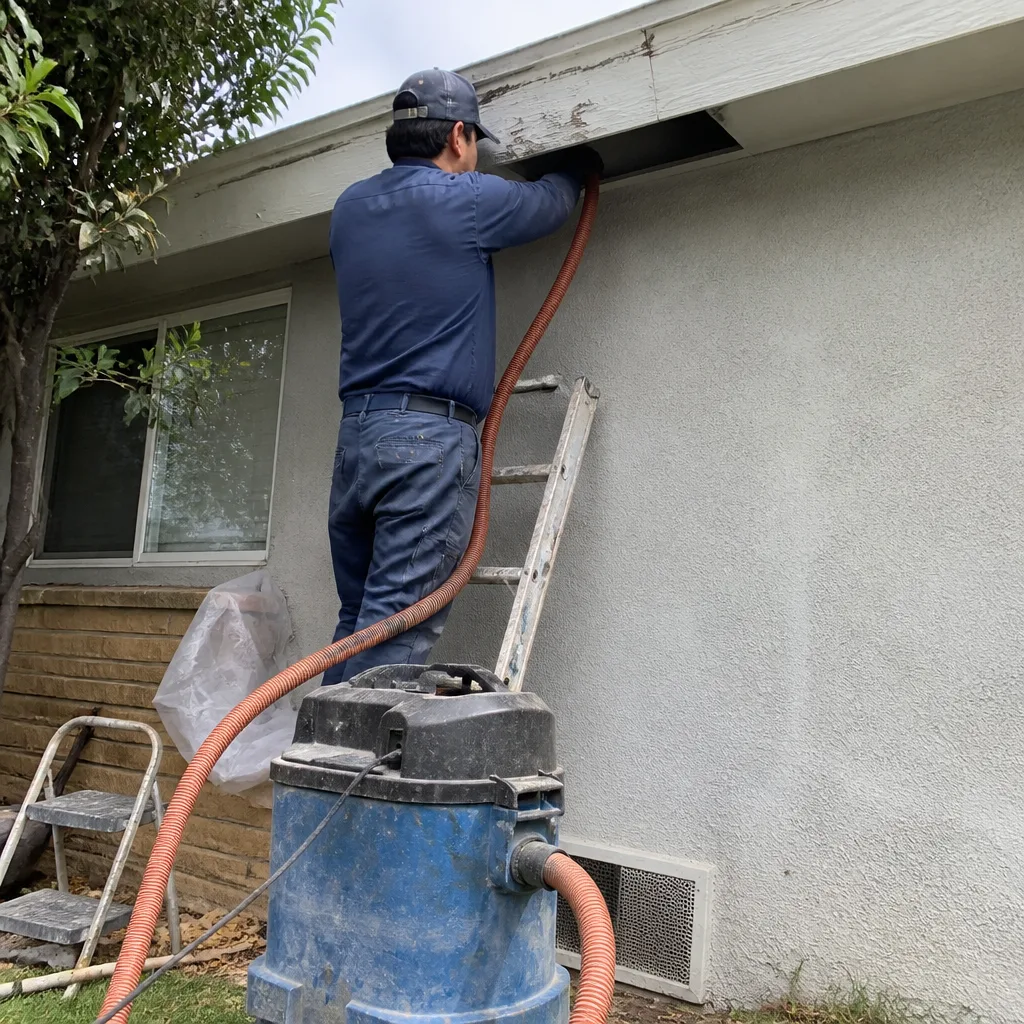 Before
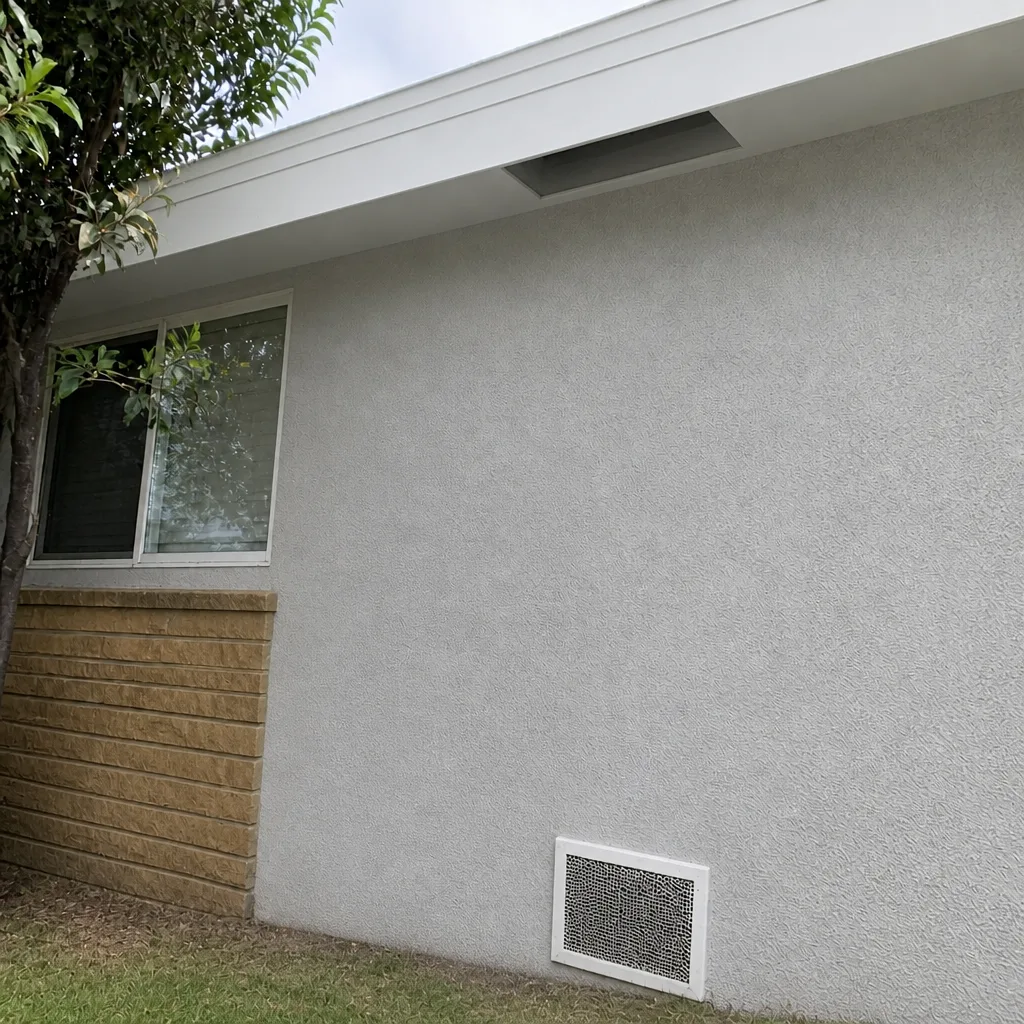 After
When to Call a Professional
Some things in a University Park home are genuinely a duct-cleaning call. If you’ve got visible dust plumes from registers within hours of cleaning, a persistent musty smell coming through the vents, or you’ve just finished a renovation, the ducts need attention. Same if anyone in the household has allergy or asthma symptoms that get worse indoors, or if you’ve never had the ducts cleaned and don’t know the history of the house. Dryer vents should be inspected if the dryer takes noticeably longer to dry a load than it used to. And if you’re a property manager with multiple units, a single coordinated scope beats booking jobs one at a time. University Park Air Duct Cleaning Co offers free estimates in University Park – call (866) 947-8605. We answer 24/7. Fast dispatch from 7am to 7pm, Sunday through Friday.
Frequently Asked Questions
Typical 2026 University Park ranges run $350 to $700 for a standard residential system, with larger or more contaminated homes at $700 to $1,500. The written estimate sets the final price after the system is inspected. Call (866) 947-8605 for an exact quote – estimates are free.
Because they are quoting a different service. A $99 special is usually a contact-vacuum surface pass, while $500+ quotes reflect source-removal cleaning with negative-pressure containment and HEPA filtration. Compare the written scope, not the headline price, to see which method each number reflects. Call (866) 947-8605 for an exact quote – estimates are free.
Ask for before-and-after photos of your own ducts, insist on a written scope that lists every item cleaned, and confirm the method is source removal with documentation of the containment setup. Any company doing the work properly can provide this without hesitation. Call (866) 947-8605 for an exact quote – estimates are free.
The common recommendation is every three to five years for most homes, adjusted for pets, allergies, renovations, or recent construction. Homes that have never had it done should start with an inspection even without symptoms. Call (866) 947-8605 for an exact quote – estimates are free.
It is a separate service and priced separately, typically $125 to $225 as a standalone job. It is worth doing independently of duct cleaning if your dryer is taking noticeably longer to dry loads. Call (866) 947-8605 for an exact quote – estimates are free.
Yes, and it’s the most underrated cost line in any quote. Rotobrush and Nikro professional platforms, Abatement Technologies HEPA containment for remediation, and Honeywell or Aprilaire air-quality products all represent real hardware cost that a consumer-grade vacuum quote simply doesn’t include. Call (866) 947-8605 for an exact quote – estimates are free.
The Bottom Line
The advertised per-vent price is not the price. The real number is the sum of your system’s base service, the add-ons you actually need, and any remediation-grade work the inspection turns up. For most University Park homes that lands between $350 and $700 for a standard cleaning, with add-ons like dryer vent cleaning and duct sealing layered on as separate line items. The best way to avoid getting burned is to ask for a written scope, compare scopes rather than prices, and confirm the method. Our team at University Park Air Duct Cleaning Co runs professional-grade equipment on every job and quotes each scope in writing before work starts.
Call (866) 947-8605 for a free estimate. We answer 24/7. Fast dispatch from 7am to 7pm, Sunday through Friday.
Written by the team at University Park Air Duct Cleaning Co.