
Last updated November 24, 2026
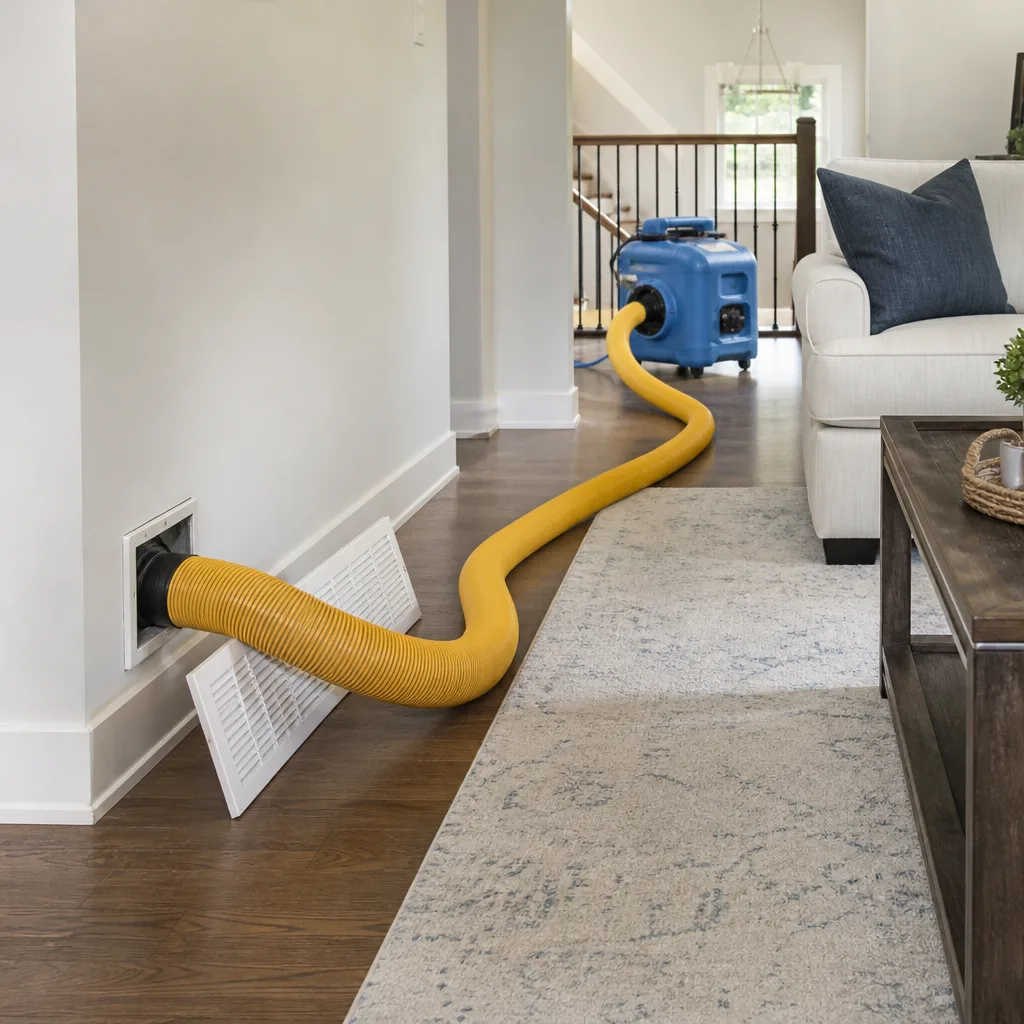 Whole-home duct cleaning
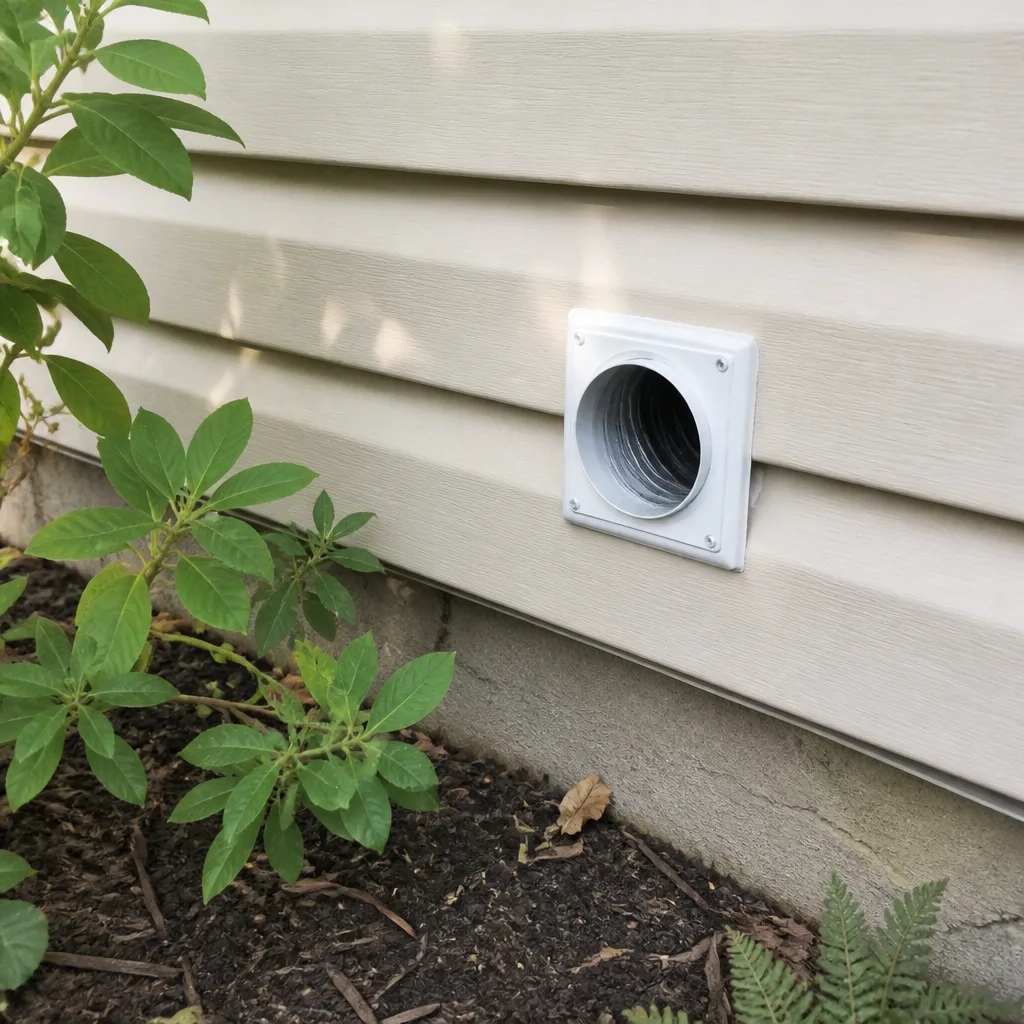 Dryer vent cleaning
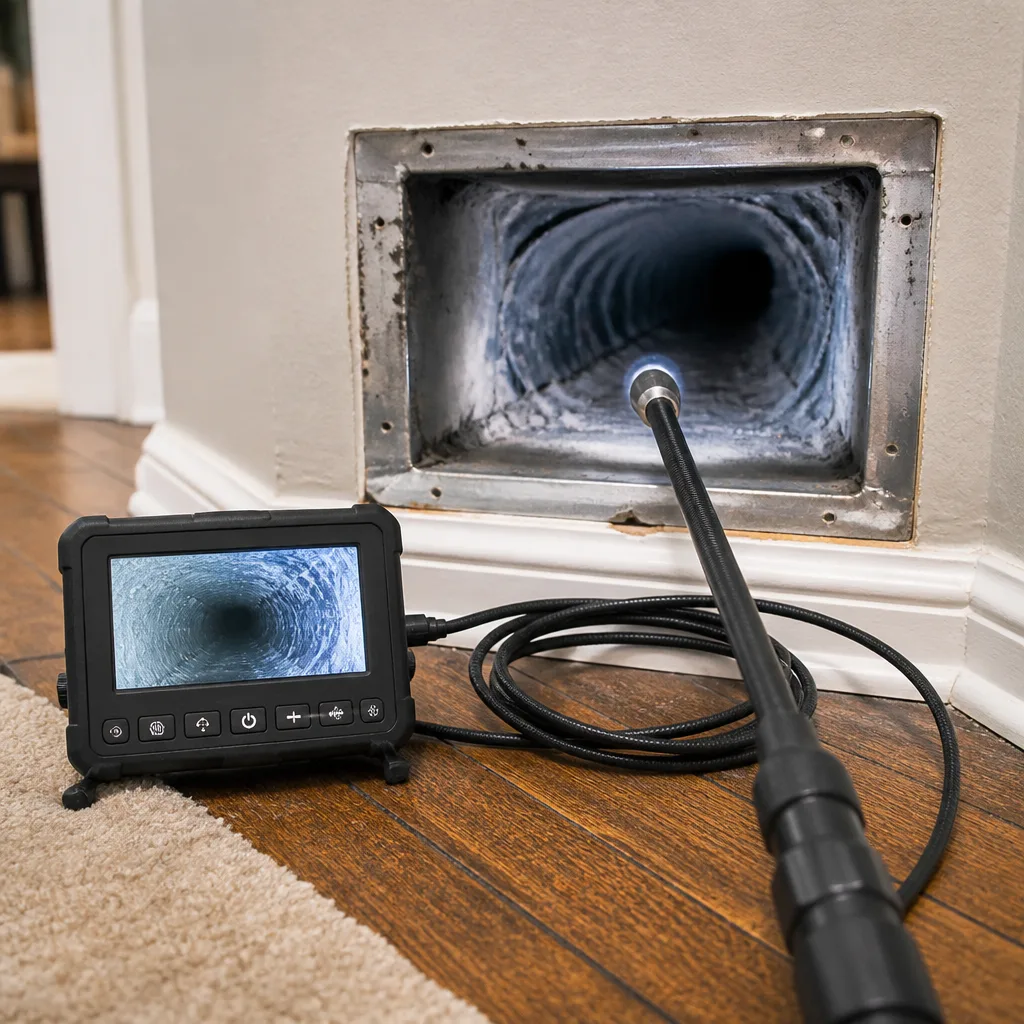 Camera inspection
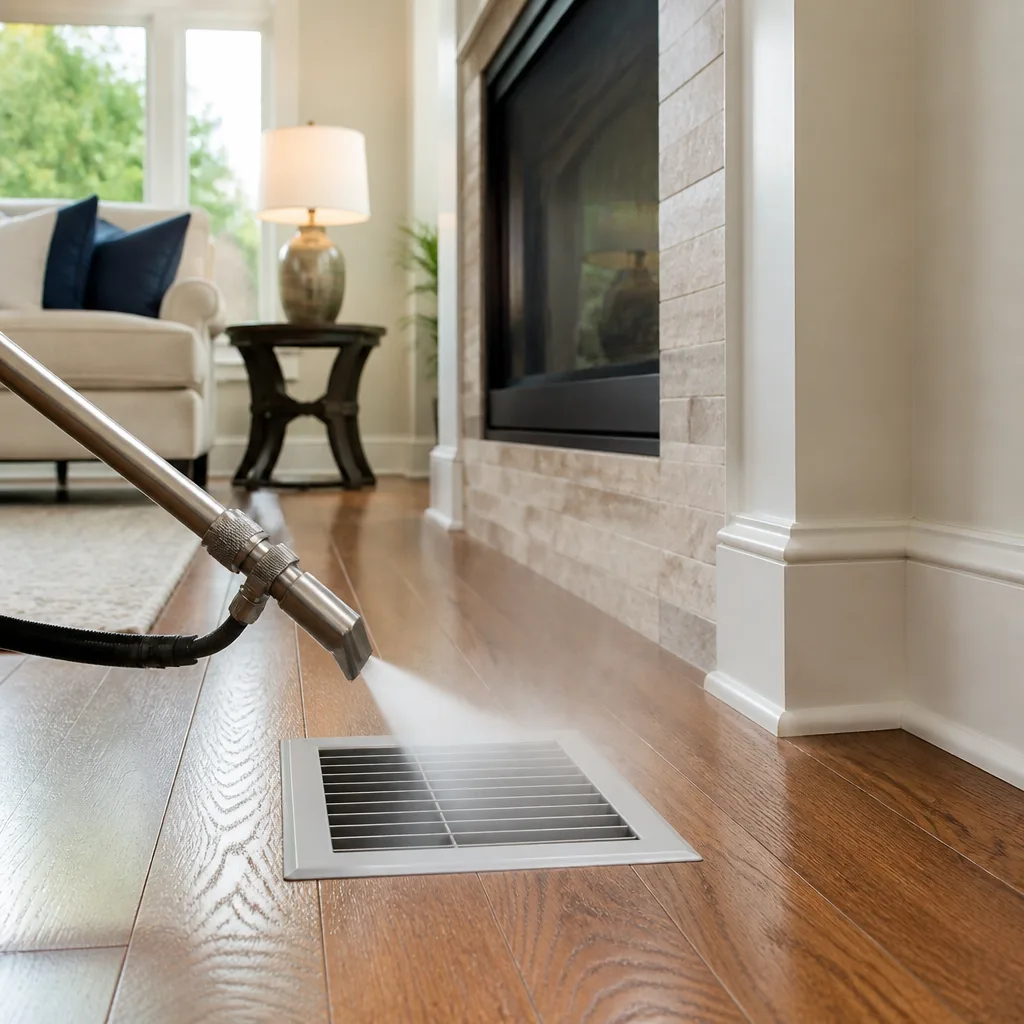 Sanitizing & deodorizing
Whole-system duct and dryer vent check with before-and-after photos - you see exactly what came out of your vents
That "$99 whole-house special" is a bait ad - the real number appears once they are in your hallway, or the "clean" is a shop-vac at the register. We photograph the inside of your ducts before and after instead.
Seasonal Air Duct Cleaning Care for University Park: Year-Round Homeowner’s Guide
Most homeowners in University Park schedule duct cleaning for spring because that’s the advice they find online, and that advice was written for a country with four tidy seasons. University Park doesn’t run on that script. Our worst particulate loading happens in fall, when Santa Ana winds drive wildfire smoke and fine ash straight into return air systems across the Southland. By the time spring arrives, the ducts have already been through their hardest months. This guide maps the actual local air quality calendar to specific duct care actions month by month, so you’re responding to real conditions in University Park instead of a generic checklist.
Quick Answer
In University Park, the most valuable duct cleaning happens in late summer and early fall, not spring. Fall Santa Ana wind events push wildfire smoke and fine particulates into return ducts, and summer’s long cooling run hours load the evaporator coil and drain pan with debris. A pre-summer inspection plus a post-smoke-season cleaning covers the two highest-load periods on the local calendar. Filter changes should track the SCAQMD air quality index, not the calendar on the box.
Styles & brands we work with
- Whole-home duct cleaning
- Dryer vent cleaning
- Camera inspection
- Sanitizing & deodorizing
Table of Contents
- The University Park Air Quality Calendar: Month by Month
- Why Fall Is the Highest-Risk Season for Duct Contamination
- What a Post-Wildfire-Smoke Inspection Should Include
- Adjusting MERV Ratings Seasonally Without Starving the Blower
- Summer Cooling Season and the Evaporator Coil Drain Pan
- The Case for a Pre-Summer Inspection, Not a Post-Summer Cleaning
- Dryer Vents and the Year-Round Fire Risk
- Repair and Sealing: Clean Ducts Are Only Half the Job
The University Park Air Quality Calendar: Month by Month
The South Coast Air Quality Management District tracks particulate levels across the Los Angeles basin, and the pattern near University Park is consistent enough to plan around. Fine particulate (PM2.5) climbs in late summer and peaks during fall wind events, while spring brings pollen and the marine layer inversion that traps morning pollution close to the ground. Here’s how that maps to duct care.
- January through March: Cooler, wetter months. Rain settles dust, but indoor humidity rises slightly and any existing duct leaks pull in damp attic air. Good window for a duct repair and sealing inspection before cooling season.
- April through June: Pollen season and the marine layer inversion. Filters load faster. This is the pre-summer window for a full inspection.
- July through September: Peak cooling run hours. Evaporator coils and drain pans accumulate debris. Return ducts carry the heaviest volume of recirculated air all year.
- October through December: Santa Ana wind season and wildfire smoke. The single highest particulate loading period for return air systems in University Park.
What makes this calendar worth following is that most duct contamination isn’t gradual. It arrives in bursts. A single multi-day Santa Ana event can deposit more fine ash in a return plenum than three months of ordinary household dust. Planning around those bursts is the whole point. For a full breakdown of what a standard cleaning involves, see our air duct cleaning page.
Why Fall Is the Highest-Risk Season for Duct Contamination
Fall is the highest-risk season for duct contamination in University Park because Santa Ana winds carry wildfire smoke and fine particulates inland from the mountains and canyons, and those particles enter return air systems through every gap in the envelope. The winds are dry, hot, and sustained, which keeps smoke aloft and moving for days at a time.
Here’s what most homeowners don’t realize. A duct system under normal return pressure pulls air from the living space, through the filter, and back to the air handler. When outdoor PM2.5 spikes, the filter catches some of it, but any leak downstream of the filter, at a loose joint, a disconnected flex run, or a poorly seated filter frame, lets unfiltered air straight into the supply side. Fine ash particles are small enough to bypass a loaded filter and settle in the duct interior where they stay until they’re mechanically removed.
What that means in practice:
- Run your system on fan-only mode less during smoke events, not more. Recirculating smoky indoor air through a leaky duct system spreads it.
- Check your filter mid-event. A filter that’s three weeks from its usual change date is already loaded.
- Have the ducts inspected after the smoke season ends, not before it starts. The contamination arrives in October and November, not June.
In our experience across University Park, homes near the 10 Freeway corridor and older properties with original flex duct tend to show the heaviest fall loading. If your home was built before the 1990s and the duct system has never been sealed, the leaks are doing more damage than the dust itself.
What a Post-Wildfire-Smoke Inspection Should Include
A post-smoke inspection should include a visual scope of the return plenum, mechanical verification that every duct joint and connection is intact, and a contamination assessment of the air handler cabinet, blower wheel, and evaporator coil. Anything less than that is a filter change with a flashlight, not an inspection.
Here’s what a proper inspection covers, step by step:
- Return plenum and filter frame: check for gaps, poorly seated filters, and settled ash on the plenum floor.
- Duct interior scope: a camera inspection of main trunks and branch runs to identify settled particulate and any biological growth in damp sections.
- Air handler cabinet and blower wheel: fine ash coats the blower wheel and unbalances it, which stresses the motor.
- Evaporator coil: smoke residue and dust combined with condensate create a sticky film that reduces heat transfer.
- Containment and filtration setup: any real cleaning should run under negative air pressure with HEPA filtration to prevent cross-contamination of the living space.
That last point is where equipment matters. Abatement Technologies equipment is what remediation contractors use for mold and contaminant projects, and it’s what we bring to every job. Consumer-grade vacuums and shop vacs can’t hold negative pressure or filter to HEPA standard, which means the fine ash you’re trying to remove ends up in the air you’re breathing. Remediation-grade equipment at residential scale is the difference between cleaning ducts and redistributing what was in them.
Adjusting MERV Ratings Seasonally Without Starving the Blower
Adjusting MERV ratings seasonally means stepping up filtration during high-particulate months and stepping back down when the air is cleaner, and the adjustment matters because a filter that’s too restrictive for your blower motor will drop airflow, raise static pressure, and shorten the life of the motor. Higher MERV isn’t automatically better.
Residential systems are typically designed around a specific external static pressure, and every filter adds resistance. A MERV 13 filter that fits loosely in a frame designed for a MERV 8 is worse than useless during a smoke event, because unfiltered air goes around it. What we recommend for University Park homes:
- Baseline months (January through June): MERV 8 to MERV 11, changed on the manufacturer’s schedule or sooner if you see visible loading.
- Peak cooling months (July through September): MERV 11 if your system’s static pressure allows it; check the air handler spec or ask your HVAC technician.
- Smoke season (October through December): step up to the highest MERV your blower can carry, and check it every two to three weeks during an active event.
If you don’t know your system’s design static pressure, don’t guess. A filter upgrade that chokes the blower will cost more in motor wear and cooling inefficiency than it saves in air quality. When we’re on a job, we can check the filter frame seal and confirm whether the cabinet is pulling air around the filter instead of through it. Honeywell and Aprilaire filter cabinets, when properly installed, seal far better than a standard return grille and are worth considering if you’re stepping up filtration seasonally.
Summer Cooling Season and the Evaporator Coil Drain Pan
Summer cooling season accelerates debris accumulation in the evaporator coil drain pan because the system runs far more hours per day, the coil stays wet, and every cubic foot of return air passes over a damp surface. That’s the mechanism most homeowners miss: the drain pan is a collection point for everything the filter doesn’t catch, and once it collects, the coil and the ducts downstream of it become a contamination source.
What happens across a University Park summer:
- The coil condenses water continuously, keeping the surface damp for months.
- Dust and fine particulate that pass the filter stick to the wet coil fins and the pan floor.
- Biological growth establishes in the pan and on the coil face, feeding on the organic fraction of the dust.
- The blower pulls air across that growth and distributes it through the supply ducts.
- By October, the pan and coil are loaded and the duct system has been recirculating what grew there all summer.
This is also why a drain pan that doesn’t drain cleanly can back up and cause water damage, and why we treat HVAC cleaning as its own scope rather than an add-on. Coil cleaning, drain pan treatment, and blower wheel cleaning are what HVAC cleaning actually means, and skipping them means cleaning the ducts while leaving the source untouched.
The Case for a Pre-Summer Inspection, Not a Post-Summer Cleaning
A pre-summer inspection is more valuable than a post-summer cleaning because it catches the problems that will get worse during the highest-demand months, when a system failure is most expensive and least convenient. Cleaning after the damage is done fixes the symptom. Inspecting before the cooling season starts prevents it.
What a pre-summer inspection should confirm:
- Duct joints and connections are intact, with no disconnected flex runs or crushed sections.
- The filter cabinet seals properly and the filter is correctly sized.
- The air handler cabinet, blower wheel, and coil are clean and the drain pan is clear and draining.
- The return plenum is sealed and not pulling air from an attic or garage.
There’s a second reason to inspect before summer, and it’s the one homeowners rarely think about. A duct system that leaks 20 percent of its cooling into an attic is a system that runs longer and harder to hold the same temperature. Longer run hours mean more debris accumulation in the coil and pan, which means more contamination in the ducts. Fixing the leaks in April breaks that cycle before it starts. We use Rotobrush and Nikro systems on every job, the same platforms commercial HVAC contractors use, because a residential duct system deserves the same mechanical cleaning standard as a commercial one. Mechanical agitation plus HEPA extraction removes what’s adhered to the duct wall; suction alone does not.
Dryer Vents and the Year-Round Fire Risk
Dryer vent cleaning belongs in a seasonal care plan because lint accumulation is a fire risk that builds year-round and doesn’t announce itself until it’s serious. The vent is the one part of the home’s air system where a blockage can ignite, and the seasonal calendar matters less than regular inspection.
What to check, and when:
- Every load: if the dryer takes longer than it used to, that’s a sign the vent is starting to restrict.
- Quarterly: check the exterior vent flap for lint buildup and confirm it opens fully when the dryer runs.
- Annually, or after any renovation: a full mechanical cleaning of the vent run from the dryer connection to the exterior termination.
Flexible foil and plastic transition ducts are the biggest offenders. They trap lint on their corrugated interior, and any sag or kink concentrates the accumulation at the low point. A rigid metal duct run is worth the upgrade if yours is flexible. Our dryer vent cleaning service is a dedicated, standalone scope for exactly this reason. It’s a fire-safety service, not an HVAC accessory, and we treat it like one.
Repair and Sealing: Clean Ducts Are Only Half the Job
Cleaning removes what’s already in the ducts, but leaks and disconnected runs are what let contamination in and let conditioned air out. Clean ducts are only half the job. On most University Park homes we inspect, the leaks and the contamination are the same problem seen from two directions.
What repair and sealing typically involves:
- Locate the leaks: pressure testing and visual inspection of accessible duct runs, joints, and connections.
- Seal the joints: mastic and approved tape at every accessible joint, plus sealing at the plenum and air handler connections.
- Reconnect and support: reattach disconnected flex runs and add support where ducts are sagging or crushed.
- Post-seal verification: confirm airflow and static pressure are within spec after sealing.
Once the system is sealed, air quality upgrades hold. That’s when a Honeywell or Aprilaire product makes sense, and when Guardsman-grade sanitizing is worth considering for a system that’s shown biological growth. Doing the sanitizing before the sealing is like mopping a floor with the tap still running. One crew handles cleaning, repair, sealing, and the air quality upgrade in a single visit, so you’re not coordinating a duct company and an HVAC contractor and a separate sanitizing vendor.
Common Mistakes to Avoid
- Cleaning in spring because a national guide told you to. In University Park, the heaviest particulate loading arrives in fall, so a spring cleaning misses the worst of it. Time the cleaning to the local calendar.
- Chasing the highest MERV filter you can buy. A filter your blower can’t handle drops airflow and raises static pressure, which stresses the motor and costs you cooling efficiency. Match the filter to the system’s design spec.
- Cleaning the ducts but not the coil and drain pan. The contamination source in summer is the wet coil and pan, not the duct wall. Cleaning one without the other leaves the growth feeding the ducts all season.
- Skipping the post-smoke inspection. A Santa Ana event can deposit more fine ash in a return plenum than months of ordinary dust. Inspect after the season, not before it.
- Using a shop vac or consumer-grade unit on duct interiors. Without HEPA filtration and negative air pressure, the fine particulate you’re trying to remove goes back into the room. Remediation-grade equipment is the standard for a reason.
- Leaving the dryer vent on an annual checklist that never gets done. Lint accumulation is a fire risk that builds quietly. Treat the dryer vent as a safety item, inspected on a schedule, not a chore for someday.
- Sanitizing before sealing. Sanitizing a leaky system treats the symptom while the source keeps feeding it. Seal first, then treat.
See the difference
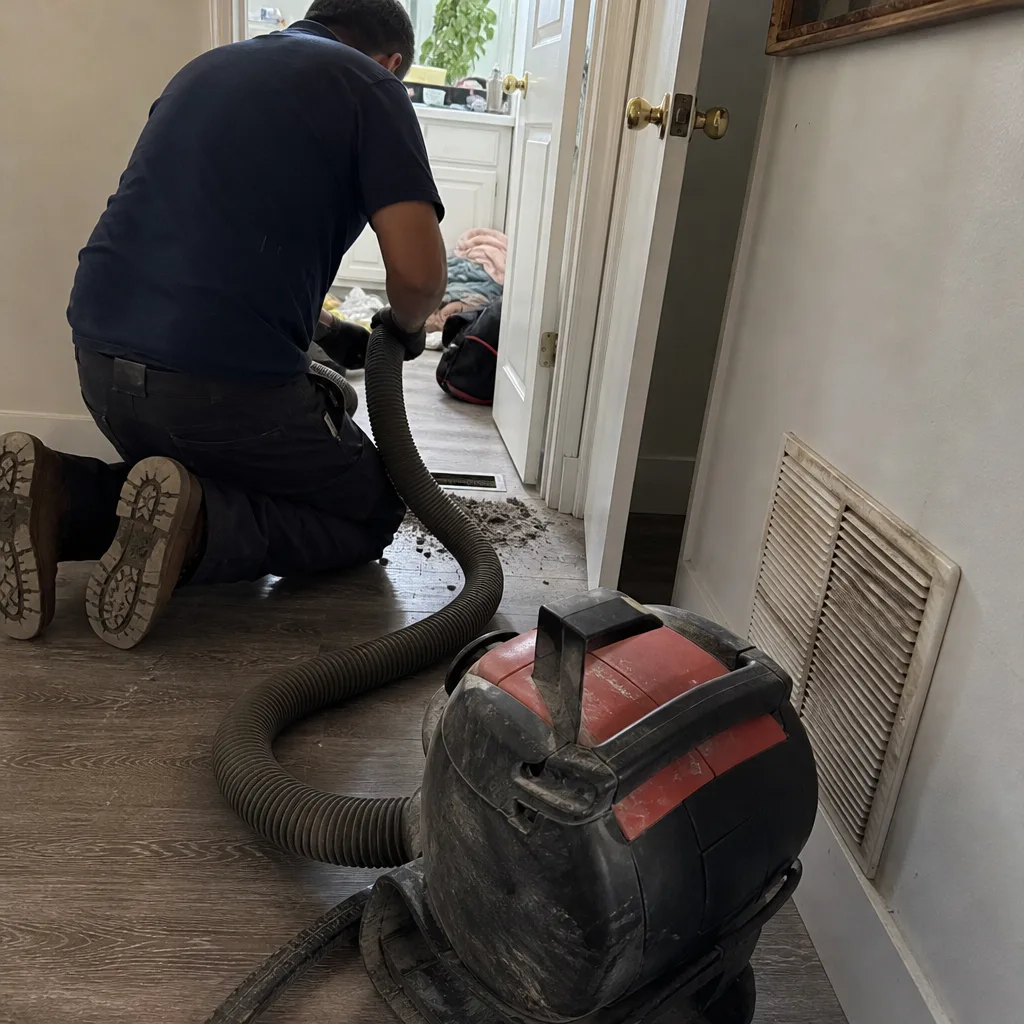 Before
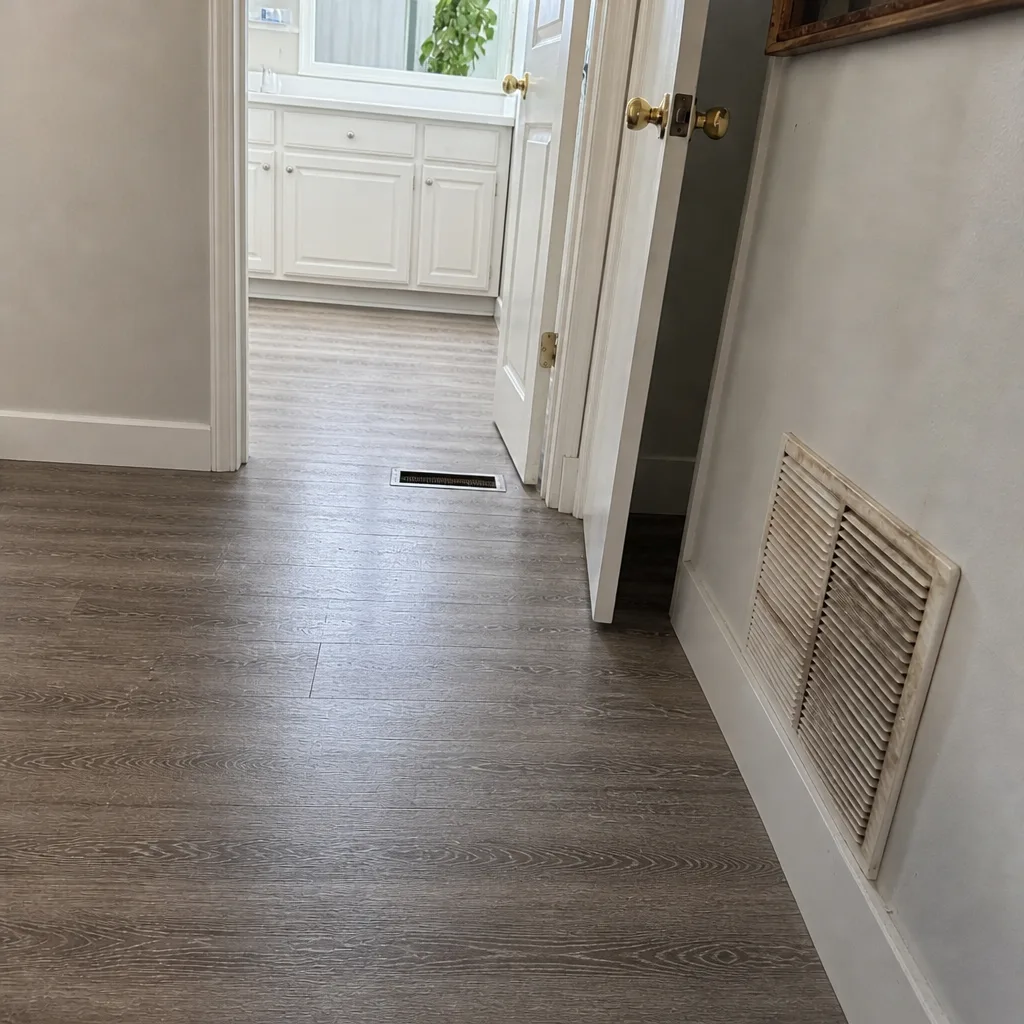 After
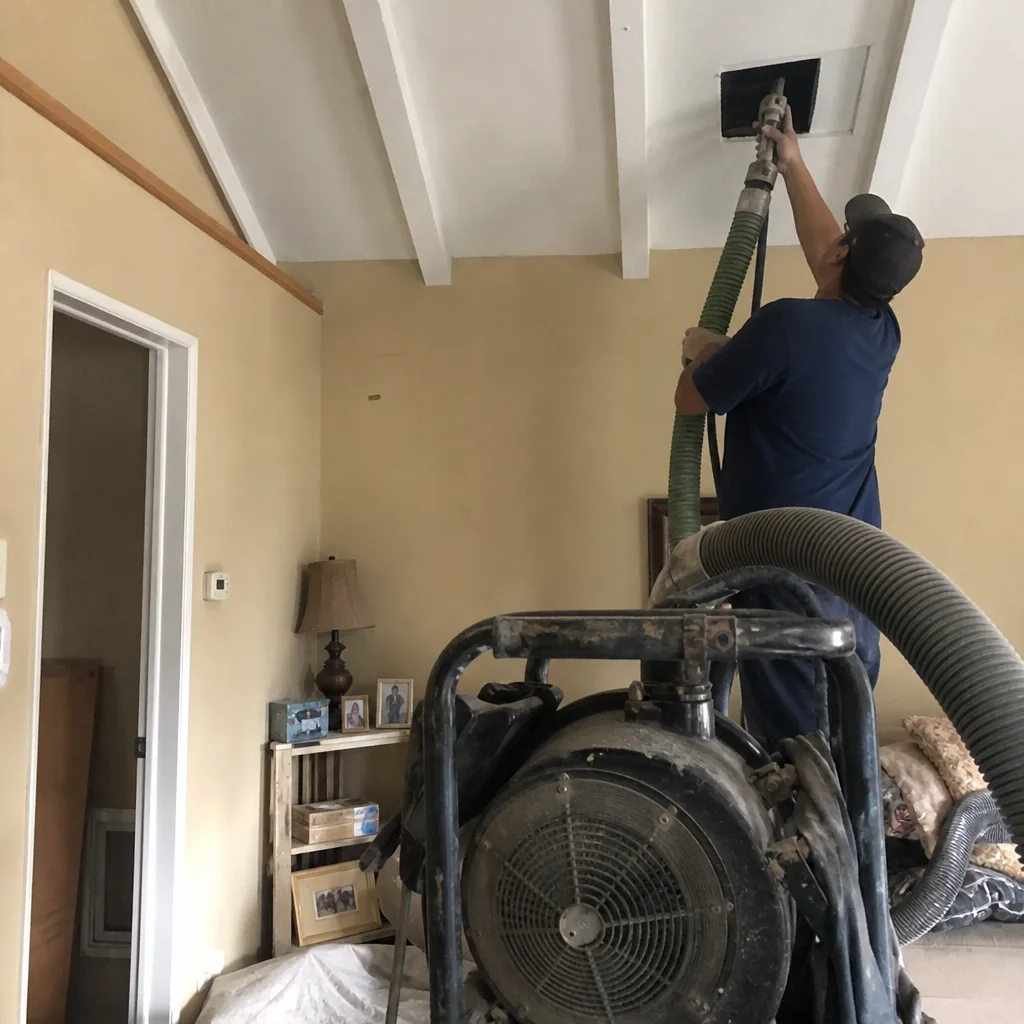 Before
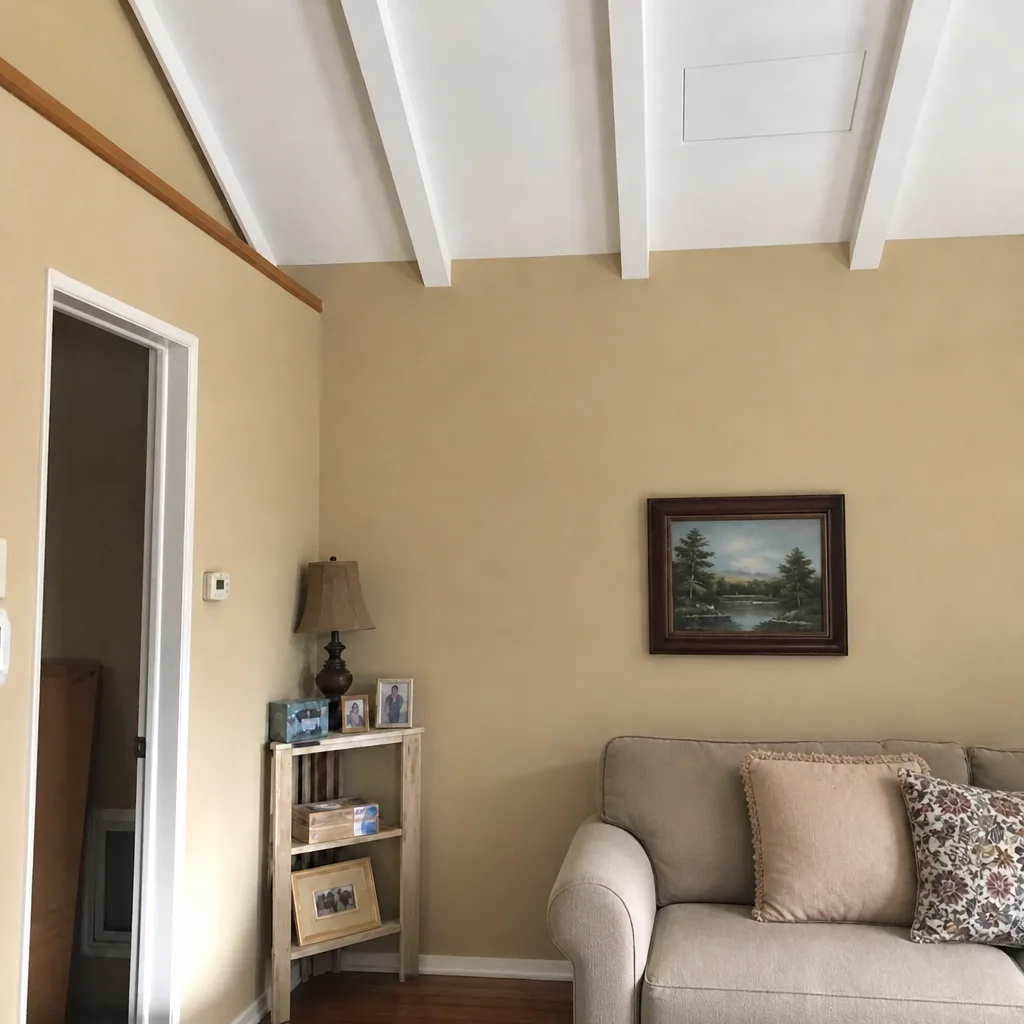 After
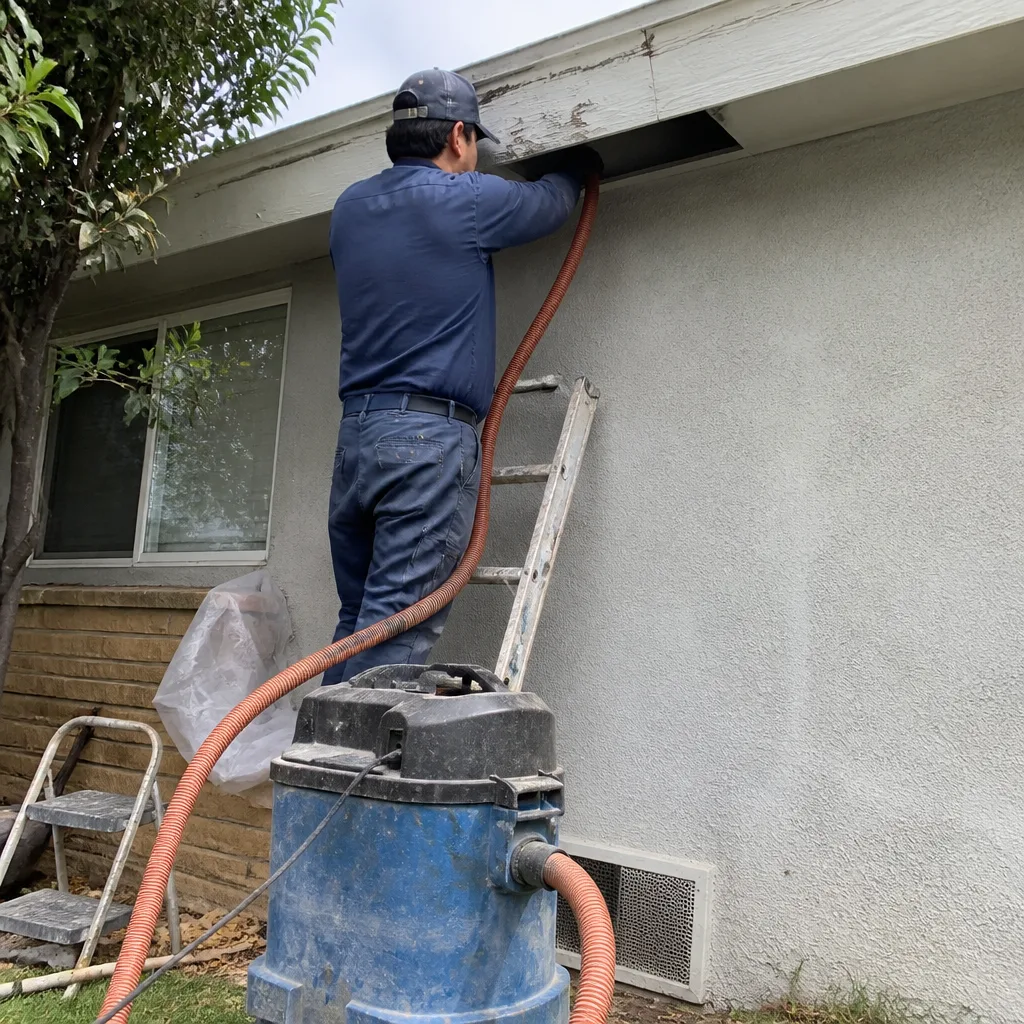 Before
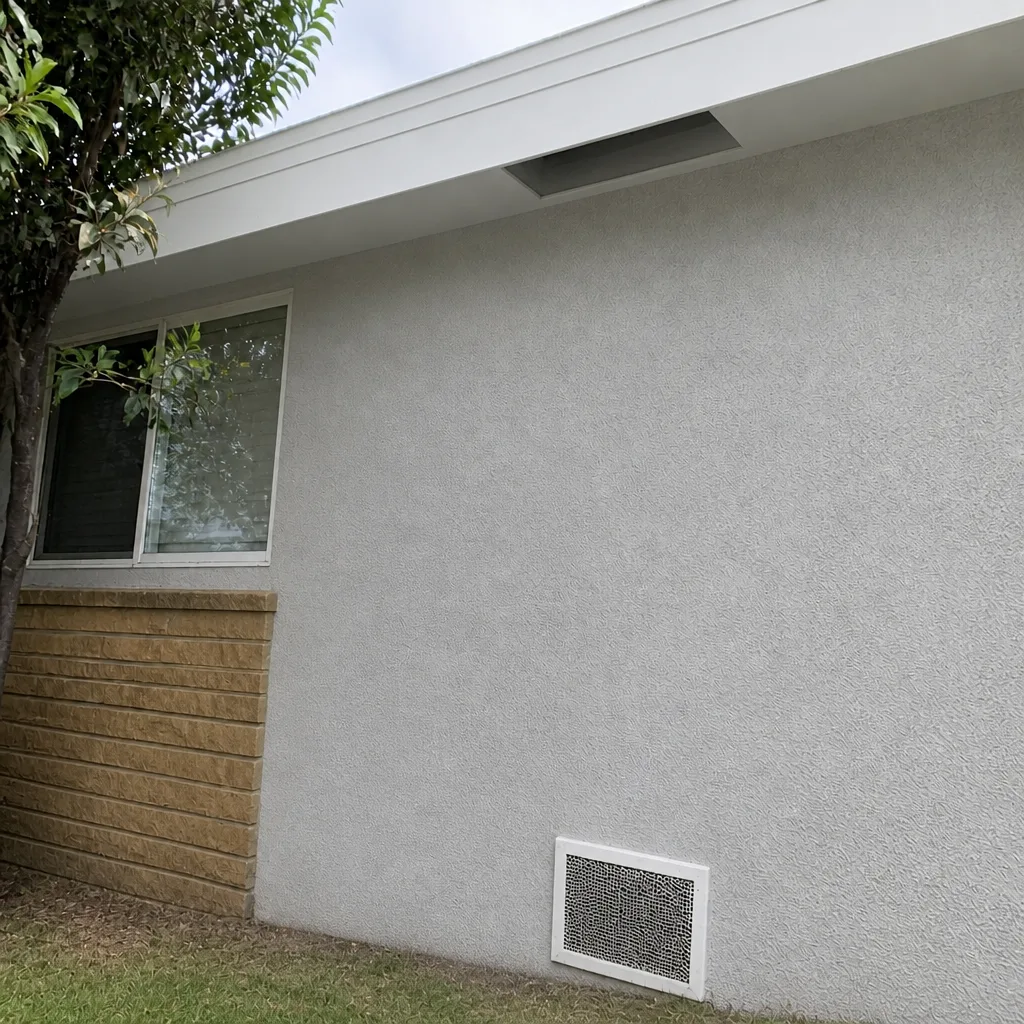 After
When to Call a Professional
Call a professional when you can see visible dust streaking from supply registers, when the system runs longer than it used to without holding temperature, when a renovation or a home inspection turns up duct contamination, or when anyone in the home has respiratory symptoms that resolve when they’re away from the house. A post-smoke-season inspection after a heavy Santa Ana fall is worth scheduling even without symptoms. Duct interior work is not a homeowner task: mechanical cleaning equipment operates under pressure and inside enclosed spaces, and doing it with the wrong equipment redistributes the particulate you’re trying to remove. University Park Air Duct Cleaning Co offers free estimates in University Park. Call (866) 947-8605. We answer 24/7. Fast dispatch from 7am to 7pm, Sunday through Friday. The written estimate sets the price, so you know the scope before any work starts.
Frequently Asked Questions
Every two to three years for most homes, with a post-smoke-season inspection every fall. The fall inspection is the local adjustment: Santa Ana wind events deposit more fine particulate in return systems than the rest of the year combined, so an autumn check catches the heaviest loading. Homes with pets, recent renovations, or anyone with respiratory sensitivity should be on the shorter end of that range.
Yes, and it’s the main thing this guide is built around. Spring brings pollen and the marine layer inversion, but fall brings Santa Ana winds and wildfire smoke. The volume of fine ash pushed into return air systems during a multi-day wind event exceeds what accumulates through an entire spring. Plan your cleaning around the fall, not the spring.
The highest MERV your blower can carry without exceeding its design static pressure, which is usually MERV 11 to 13 for a residential system. A filter that’s too restrictive drops airflow and stresses the motor. Check your air handler spec, or ask your HVAC technician, before stepping up. Also confirm the filter cabinet seals properly, because a high-MERV filter that leaks around the frame is worse than a lower-MERV one that seals.
It’s the hidden contamination source in summer. The coil stays wet for months, dust sticks to the damp surface, and biological growth feeds on it. The blower then recirculates that through the supply ducts all season. Cleaning the ducts without cleaning the coil and pan leaves the source in place. That’s why we treat HVAC cleaning as its own scope.
Ask for before-and-after photos of your own duct interiors, a written scope of what was cleaned, and a confirmation that the work ran under HEPA filtration and negative pressure. Mechanical agitation with a Rotobrush or Nikro system and HEPA extraction are verifiable: the duct wall is visibly different before and after, the blower wheel and coil are clean, and the filter cabinet is sealed. Estimates are free, so the scope should be clear before any work starts. Call (866) 947-8605 for an exact quote.
Yes, and it’s a safety item rather than an air quality one. Lint accumulation in the vent is a fire risk that builds steadily and doesn’t clear on its own. Check the exterior flap quarterly, and have the full run mechanically cleaned annually or after any renovation. Flexible transition ducts trap lint worst, so a rigid metal upgrade is worth it if yours is flexible.
The Bottom Line
University Park’s climate doesn’t follow a four-season HVAC script, and duct care shouldn’t either. The local calendar runs: inspect in spring, watch the coil and drain pan through the summer, and treat fall as the highest-risk season because Santa Ana winds push wildfire smoke and fine particulates into return air systems. Match your MERV rating to the system’s design spec, not to the season you bought it in. Clean, seal, and repair as one scope, because leaks and contamination are the same problem. And keep the dryer vent on an annual safety schedule. If you’d like to work through the calendar with a specialist who knows the equipment, call University Park Air Duct Cleaning Co at (866) 947-8605. We answer 24/7. Fast dispatch from 7am to 7pm, Sunday through Friday. Free estimates, and the written estimate sets the price.
Written by the team at University Park Air Duct Cleaning Co.